31 October, 2018

Brightness Reef by David Brin


David Brin intentionally includes inconsistencies within his characters’ logic in a way that seems to reflect real life. For instance, when discussing where sapient species come from, the galactic community says that self-uplift is impossible. Galactics don’t believe in evolution: no species has gone from single cell to complex, meta-cognitive creature on their own. But—and here’s the key to Brin making this feel like the world reflects reality—that fabled, probably first race that did so much to uplift so many, the Progenitors, may have. This is what I mean by inconsistent logic; these hereditary, patron-client obsessive people believe two different things about the same process depending on their own perception of the time frame involved. Through knowing hypocrisy, thoughtlessness, willful ignorance, lack of examination, or accident, people don’t always follow what they think they believe. Neither do Brin’s characters. And this is one of the main things that makes Brin’s world, Jijo and the Five Galaxies, so convincing. This one move right here helps Brin build a believable world, and helps sew the seeds for mystery and lack of certainty that drive the story onwards.
Creative people see Prometheus in a mirror, never Pandora.

And this example isn’t the only one Brin uses of intentional inconsistencies: humans are progress oriented, trying to leave their children better off than they were, but on Jijo they are trying to downlift themselves through attaining ignorance and reversing their evolutionary track. These two competing drives, this inconsistency, deeply informs Sara’s character. I feel like a lot of people care a lot about consistency in their written works, and it’s refreshing to see Brin reflect reality by intentionally including inconsistencies in his work. It’s something I need to think about more in my own writing. It seems particularly appropriate to larger works.
It was a strange trek — the sullen leading the apathetic, followed by the confused, all tailed by the inveterately amused.

The writing here is quite good. The descriptions are engaging and informative. He has come so far from Sundiver, and he is getting better as a writer. I appreciate seeing an author improve. His best work here is in world building, and character development through making each talk in unique ways. This is a complex world with six species and multiple representative characters from each species. Though at times I get a little lost which of the Six species certain characters represent, I tend to think maybe my inconsistent reading schedule is more to blame than Brin’s writing. This over complexity is partially solved by a drawing included in the book, showing the six races: the drawing helps keep them straight. But they are so interconnected that they each borrow verbal and physical communication skills from each other, further confusing my reading. The need for the drawing seems like it may be a weakness, but I’m not sure it wasn’t just me reading this book in too many starts and stops. Well, the chapters are often short, starting and stopping often after a couple of pages, encouraging my reading pace.
Magic and art arise from an egomaniac's insistence that the artist is right, and the universe wrong.

The themes clearly deal with diversity, while showing positives—creativity, self-identification, and variety of interpretations of events—while also showing some of the negatives—stubbornness, forgetfullness, the ease of schisms developing along species lines, and the variety of a single event’s threat level on differing species. This is one of Brin’s main themes that is consistent across all of the Uplift books so far, having now read the first four. He also focuses here on evolution/devolution, especially relating it to technology and language. And his main idea here is summed up by saying that perhaps language devolution is a sign of progress, allowing more subtle things to be communicated more easily compared to the more rigid Indo-European. Even this interesting observation is tied into the idea that diversity increases complexity, which is often a benefit.
How strange. Humans always seem so much in control. Is it just a grand act, to fool both others and themselves?

This novel is one of the best Brin books I’ve read. To be as clear as possible, this is a great novel. It’s only hampered by being part one of three—at the end, too much is left in the air for this to be a great novel in its own right. But while reading it, I loved it. This book coalesces to sensational storytelling, great writing, a satisfyingly complex plot, and a solid example of world building. I am excited to immediately get on with the next novel in this series.

17 September, 2018

A Voice from the Main Deck by Samuel Leech


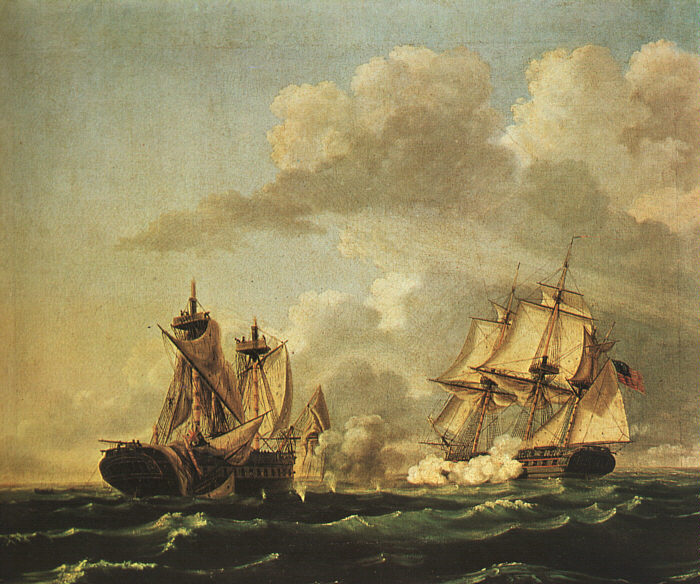
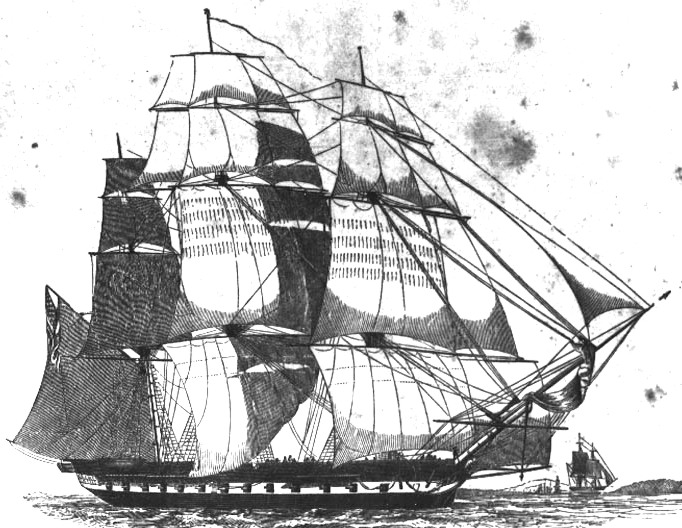
The full title is Thirty Years from Home, or a Voice from the Main Deck; Being the Experience of Samuel Leech, Who Was Six Years in the British and American Navies: Was Captured in the British Frigate Macedonian: Afterwards Entered the American Navy, and Was Taken in the United States Brig Syren, by the British Ship Medway of Samuel Leech. And I take issue with that title: because it advertises itself to be an account “from the Main Deck” around the War of 1812, a war memoir, I bought this book and read it. It isn’t a war memoir. Instead, it’s the life story of somebody who once served on the main deck. The war memoir portions may occupy a quarter of the book, and it’s in the most general terms—Leech keeps telling his readers to refer to newspapers if they’re interested. Seriously. A guy sits down to write his memoirs, and asks his readers to read the newspapers to get a sense of what it was like on the main deck. This undercuts the author’s authority by constantly cutting off when he almost provides insight into the day to day. Clearly not a great tactic. Today it would be like referring the reader to Wikipedia in the middle of your book, because you can’t be bothered to write your own book. In his defense, there are a few interesting paragraphs. I would quote them here so you wouldn’t have to read it, but I’m afraid it would tempt you to try and read the book. Help me help you not buy this book. Even at 99¢.


So, a fair question is what the book actually is about, compared to what it is advertised as? In the end, this book is less about what it says on the cover, and more about the author himself. The author only spends a few of those thirty years advertised on a ship—maybe five or six. The main focus of the book is what pet peeves Leech has: gambling, alcohol, lying, and flogging. He ignores what most Methodists would consider sexual sins, but maybe that’s because he’s trying to make his book “genteel”. He speaks from experience, so it’s easy to spot his biases. But he frames his statements as if he writes the truth, nothing but the truth, and the whole truth. For instance, in the case of flogging—which I am not into, for the record—he states that the public shame ruined every man who was flogged, then launches on a written crusade against flogging. Yet, he consistently gives us examples of flogged people who appear to have come out the other side mentally healthy. He draws a big comparison between the British ships he served on, which flogged heavily, and the American ones—he never mentions any American floggings. Yet, he never deserts from his flogging ships until the last one is taken in war and desertion is set up for him, while he deserts from his American ship later. He talks consistently about his desire to be at sea—most of the book takes place on land—yet takes few steps to get there. These incongruities built throughout the book and I was dissatisfied with my read. I kept reading hoping he would get back to sea, like he talked about, so I could read more about the differences in how American and British ships of the period were run.


The focus of the book rests on the author’s personal transformation from a heathen sailor to a Methodist Christian shopkeeper, and the title is misleading for that. From the Main Deck apparently refers to feeling guilt over buying and selling rum at his shop. Something like Baa Baa Black Sheep by Pappy Boyington has this moralizing element as well, but Boyington restricts himself to a few pages of that transformation, and focuses on writing his wartime memoirs. That’s a much more effective book and writing tactic than the one used by Leech here.


This is a bad book and I wish I hadn’t read it. I hope to someday find an interesting book from the main deck’s point of view in a man of war from this time period. But this author trusts too much in his audience’s familiarity with the normal, and ignores the title of his book in order to spend most of his time shilling for donations for his new Christian outreach organization. It wasn’t informative or gripping. It was rambling and navel gazing.

16 September, 2018

Sundiver by David Brin


I just finished reading Sundiver. This appears to be my first David Brin since 2015, when I read the two novels that come right after Sundiver—Startide Rising and The Uplift War. Those are both better than Sundiver. But that’s not to say that Sundiver is terrible. I did finish reading it and am glad I did. But I'm not sure I would ever recommend this book to somebody else.


The most interesting part to me is this theme that Brin runs through the whole book: integration into a technologically superior society. It’s a theme that mainly comes out in the worldbuilding Brin does. This novel’s story takes place shortly after human first contact with galactic powers that have been around billions of years. In contact, humans provide an awkward question for these elder species: where did humans come from? As there is no record of who nurtured humanity to sentience, they are known as a Wolfling species, a phenomena that is known but rare. It’s inconceivable to some species that humans evolved without outside influence, and who should be humans’ patrons? But combine their unknown past with two further backstory facts, and humans are not just rare, but unprecedented: fact one, humans discovered galactics, not the other way around; fact two, at the time of first contact, humans were already in the midst of uplifting chimpanzees and dolphins. This places humanity in a unique position that the hierarchical minded galactics have trouble conceptualizing. On the one hand, species who uplift others gain prestige. On the other hand, species who are uplifted by a long line of patron-client relationships, older species, gain prestige. The fact that humans have one but not the other makes them an awkward-at-best newcomer to the galactic community.


As a science fiction setting, this has some interest. But where Brin is brilliant is when he draws parallels to Europeans moving into North America, naming specific Native American tribes and historical figures. He shows how one tribe tried to fight traditionally and lost, another tried to integrate and saved their lives by losing their identity, another tried this, another tried that. He explicates what may be the most tricky political situation yet discovered by man, through using a space-based parallel. Should humans continue doing independent research when so much of the galactics knowledge is now available to them? Should they integrate as soon as possible, picking a patron species and letting themselves be uplifted into the galactic community? Should they retain their independence? It’s a fascinating study on Brin’s part. It’s really burning in my brain at the moment. (The other ideas all deal with human psychology and how we respond to trauma and work in groups. The main point with the human themes seems to be a sense that no matter what the tragedy, our responses should be our responses, not our ideas of how others respond.)


But the book can’t get out of its own way and explore this wonderful premise adequately. Integration is often ignored in the book, as a murder mystery takes up half of the book. And that’s the biggest problem here: the book doesn’t know what it wants to be, and probably isn’t playing to its strengths. There were three points that made me want to stop reading.


First, the writing in the opening couple of chapters isn’t great. It’s downright bad early on, but the story he is telling, and the ideas he introduces, are interesting enough to carry the clunky phrases and awkward sentences. So, though I contemplated stopping my read in the first few chapters, I didn’t. It’s obvious that Startide Rising had better writing, and I thought that writing was not great—but hey, this is his first novel, so it’s understandable that he gets better with practice. Good for him, not good for this book.


Second, the main character is a superman, and the rest are caricatures. Boring. I find that the journey the main character goes through to get over the trauma of losing his wife starts to hint at Brin’s later skill at character creation. But it’s not good enough here.


Third, the split in what this novel wants to be is awkward. It’s part galactic level politics and part murder mystery, both played out in a setting of a solar system research project. But the parts are too separate. After the reveal of Billibub’s crimes, the novel struggles to find its footing again. I looked down at what sounded like the end of the novel, saw that a quarter of the novel remained to be read, and wondered what in the world Brin would put in there. Then I felt that the continuation of the story of the solar ghosts was a bit of a let down after the action and whodunnit of the middle part of the novel. Of course, the murder mystery eventually returns as Brin’s detective got some things wrong, but the novel is still oddly paced. One quarter is about the ghosts, then half is about the murder and detective work, then the last quarter is largely about the ghosts, with a couple of chapters to resolve the murder mystery. This didn’t really hold together for me. It took some effort to get to the end.


In closing, on display here are some interesting ideas, but this book is only for fans of the universe, it seems. It’s a bad book. The pacing is inconsistent and offputting. The writing is painful at points. Plot elements are hamfisted. Yet the story shines in reflection, the pacing just got in its way. And Brin’s later ability to build good characters is almost on display here, but not quite. There is one engaging character thread, but things are not consistent enough to make me enthusiastic. The ideas and world building carry these negatives, for me. But in all, I wouldn’t recommend this book to somebody who does not like The Uplift War.

11 September, 2018

Annihilation by Jeff VanderMeer


A typical writing tactic is to reflect the character’s mental state with the writing mechanics. For instance, when a character goes crazy, the word choices, phrase lengths, and sentence structures follow: they all reflect this by being more imprecise, more inconsistent, and more convoluted. A crazy person’s narrator often pushes the boundaries of grammar and communication. Jeff VanderMeer doesn’t. When his biologist main character encounters the unknown it gets to her. But he doesn’t stop telling the story his way. VanderMeer writes short sentences. This is no Jack London. VanderMeer’s biologist pendulum swings to and from uncertainty throughout, but VanderMeer keeps his writing steady. Instead of using intentionally messy sentences, he uses imprecise terms, like “The Crawler”, to denote the unknown. His writing is precise in description, yet obscure in meaning.


That’s the main thing that stands out to me, his use of language and sentences. This is a story about the main character grappling with an esoteric mystery, and his writing matches. One example is that he applies multiple terms to the same set piece: the tower, the tunnel, two separate descriptions of physical size—one precise and one approximate—and what two different characters see—a biological organism or a concrete and shell built structure. In this way, the main character uncovers what she does of the mystery slowly, over time. As the terms shift back and forth, so does the reader’s understanding of both the set piece and the biologist’s mental state. So, rather than the sentence structures’ repetition becoming boring, the importance placed on the word choices lend inherent interest.


The whole is couched as a transcription of the biologist’s journal. She narrates the novel. Revealed near the end is the premise that these words are her writing out her journal after the fact, sitting up in the lighthouse and trying to communicate the prior few days. Her biologist’s training seems to affect the story as she describes, contextualizes, and attempts to synthesize hypotheses. She samples things and is just as confused about what is beneath her microscope as what is before her eyes. Much of the narrative deals with description. Like a biologist with a new species, as the story progresses, she slowly comes to terms with the unknown and unexpected. Beginning in a mental framework of familiar biological premises, her experiences and explorations lead her to unthinkable ends. It’s a slow process, even for a fringe biologist like herself.


Yet there is another half of the story, involving her now-dead husband. And this half VanderMeer holds away from the reader for the first quarter of the novel. I can see reasons for this: a wish to not overwhelm the reader right off the bat, a desire to allow the basics of Area X to be fixed in the reader’s mind, and the fact that the rest of the expedition is still alive for this part of the book, leading the biologist herself to cover up this half of the story intentionally. But by holding something away from the reader for so long, VanderMeer runs the risk of jarring them out of the narrative when it is introduced. Maybe the husband is a later invention of the writer, put there because of some perceived lack in the narrative, some perceived dissatisfaction with his own writing. Does it jar me? No. But for so much emotional weight and screen time, I’m not sure the payoff is there. Ultimately, the husband serves to set up the sequel. Sure, his presence does add some gravitas and some interest to the main character’s personality and mental anguish, but it seems a lot of effort for too little payoff. And if the main point of the story is the biologist overcoming her personal tragedies, which I don't believe, then the husband needed to be introduced much sooner in the novel.


The Area X part of the story is a mystery, inherently. Why has this shadowy governmental institution, The Southern Reach, shut Area X off from the world, and why are they interested in studying it? What is Area X? All we know by the end is that some sort of symbiotic, assimilatory relationship occurs there that exists outside of the normal human experience on earth. It’s mysterious and esoteric intentionally. The story is more that the biologist is coming to grips with the fact that there is mystery, than understanding any solution to that mystery. Is Area X’s origin and current state climactic in nature? Extra terrestrial? Nuclear or biological disaster? We don’t know. Neither does the biologist.


But what the writing, characterization, and story all work towards is the biologist growing in understanding of something she doesn’t discern at first. The coolest thing here, and the thing that the novel does best, is to show this process of coming to grips with the unknowable. You could read this book as a metaphor for religious experience, alien encounter, or the biologist dealing with the loss of her husband. In other words, any esoteric understanding or situation that changes everything. And VanderMeer portrays this wonderfully. The biologist starts out resisting the thought that things are changed, then she takes that thought way too far, then she reins it back in to what she considers a sensible response, all while she changes fundamentally. It’s a gripping journey, and one that uses science fiction to help explain what is fundamentally a universal experience. In this thread, it reminds me of Embassytown, by China Mieville—a favorable comparison as Embassytown is a great novel to me.


The focus of the writings rests on description and internal monologue. Though there is some action—one chase, one murder, the discovery of two bodies, and one attack by an unknowable creature—most of the story is the biologist either walking around getting freaked out, or sitting down getting freaked out, and thinking about things. VanderMeer uses internal monologue to ramp up the tension and there are more psychological crises than physical ones. More close calls that satisfying action scenes. This ruminatory focus isn’t inherently a problem, obviously, unless he writes physical action better than psychological action. But I did find myself slightly wishing that something meat and ballistics would occur more often than just walking down a set of stairs, or across a beach, or up a lighthouse. Slightly, I emphasize. And probably only because there is so much implied action that occurs off scene. VanderMeer says that so much has happened off scene and does not show it to me. I think I wanted a little more on screen. One or two more actions. Less buildup for actions that are averted. But this story being the biologist’s journal means that VanderMeer probably wants to reinforce the mystery by having the biologist confused how half of her squad died. It works, but may not have been more than a good tactic.


So, since the words focus on what’s happening in the biologist’s head, I should at least mention some of the themes she’s thinking about: mortality, perception, wildlands versus areas humans live, interpersonal relationships, the status of self during upheaval, the ecology of areas between other areas, spirituality (lightly), morality (also, lightly), and the nature of linked relationships like a marriage, or expeditionary squad, or coworkers. These are a lot of themes. VanderMeer focuses on perception and mortality, relationships and self, ecology and mystery. And I am curious about where he will take these themes. But the main theme here is how humans approach mystery, how we categorize and dissect the unknown, and how we react when our normal processes don’t pay off. VanderMeer shows that to approach something sublime necessarily changes us, like the biologist left alive at the end of the book, or we try our best to ignore it, like the murdered surveyor.


In closing, this somewhat Lovecraftian tale is good. It’s dark and tragic and I’m not sure I want to read more in this series. There are two other books dealing with The Southern Reach, but I like the mystery so much that I’m not sure I want to know more about it. I appreciated his writing and will probably read another novel by him, but not next. I usually appreciate more complex sentences than this. I would compare this novel to Embassytown in humans approaching the unknowable, and The Moon is a Harsh Mistress in the main character narrating the tale. But I find Mieville to be something I want to reread more, and Heinlein allows his characters more influence over their tale. This is a good book, but not great.

18 July, 2018

Lords and Ladies by Terry Pratchett


This book tells the story of myths invading Lancre, a small kingdom deep in the mountains. On the one hand, elves invade from a parallel dimension. On the other hand, Magrat embodies a fictional myth to defy the actions of the elves. On yet another hand, Shakespeare is being spoofed throughout.
In fact, the mere act of opening the box will determine the state of the cat, although in this case there were three determinate states the cat could be in: these being Alive, Dead, and Bloody Furious.

On the first hand, the theme is on the book cover. The elves are a kind of aristocracy—expectantly entitled, cruel but beautiful, and more powerful than normal people. Myth isn’t necessarily bad, it’s attractive. But when people subordinate themselves to myths of the past, they forget their own present and others’ futures. On the other side of myths being bad, having the aristocracy around to organize and lead some fighting can help: Magrat forgets too much of her earlier self while becoming a queen, but then is able to help when she remembers because she is a queen. Well, almost a queen.
Nanny Ogg looked under her bed in case there was a man there. Well, you never knew your luck.

But I think the more important theme lies in the myth-becoming-real. It allows Pratchett to play out how people typically deal with myth in their day to day life, or don’t as the case may be. For instance, Granny resists the myths because she can see the damage they have caused and will cause if allowed to reign again. However, at one point or another, all the people who can resist the myths are too tied up with their personal paramours to care or even notice—myths and shifts in cultural psychology are subtle things that are often missed. Yet, like the first-level analogy shows, myths are something to balance with reality, to banish when they’re dangerous and encourage when they’re beneficial. I think this is the main point of the novel.
Personal’s not the same as important. People just think it is.

On the third level, Shakespeare is both kind of silly (this book spoofs Midsummer Night’s Dream) and really important simultaneously. Quite like myths. He helps explain humans and their craziness, as well as making them laugh at the same time. I wonder if this book is Pratchett’s tribute to that most famous writer. So many parallels can be drawn between the two.
Verence would rather cut his own leg off than put a witch in prison, since it'd save trouble in the long run and probably be less painful.

Pratchett here combines all these aspects of examining myths into every facet, nook, and cranny of his book. The resolve argues that what we can do today is better than what we could have done back in mythic times, trying to drag people’s focus to the here and now instead of there and then. The whole well-focused affair comes off much like the strengths of Small Gods did: brilliantly.
It wasn't that Nanny Ogg sang badly. It was just that she could hit notes which, when amplified by a tin bath half full of water, ceased to be sound and became some sort of invasive presence.

Yet, where Small Gods kept the slapstick down and the philosophy more on the surface, here Pratchett subsumes the philosophy under the slapstick patina, as is typical of his other Witch tales so far. Pratfalls and Shakespearean parody run the show from start to finish, translated into the Discworld universe successfully. But the underlying philosophy is always there and always guiding the twists and turns in the plot.
Don't try the paranormal until you know what's normal.

That’s all I can say, I think. It’s somewhat more slapstick than Small Gods, but as deeply interesting philosophically or sociologically. And it’s a strong, strong novel that needs to not be ignored in the Pratchett cannon. Some Shakespearean love helps, I’m sure—but less than with Wyrd Sisters, his other Shakespearean tale.
You can’t say ‘if this didn’t happen then that would have happened’ because you don’t know everything that might have happened. You might think something’d be good, but for all you know it could have turned out horrible. You can’t say ‘If only I’d…’ because you could be wishing for anything. The point is, you’ll never know. You’ve gone past. So there’s no use thinking about it.

17 July, 2018

Small Gods by Terry Pratchett


Pratchett deftly handles faith and atheism, religion and politics, myth and reality, philosophy and theology, humanism and higher powers. He claims he has received letters from believers and non-believers praising him for this book, and I can see why. It’s a masterclass of even-handedness. Sure, Pratchett comes down on the side of atheistic humanism personally, but lets the book come down on a faith-based finish, as seems appropriate in this fantasy setting. And I think that balancing act indicates what makes this novel so great.
His philosophy was a mixture of three famous schools—the Cynics, the Stoics and the Epicureans—and summed up all three of them in his famous phrase, 'You can't trust any bugger further than you can throw him, and there's nothing you can do about it, so let's have a drink.'

The book is funny in two ways: it has some of the slapstick humor of earlier Pratchett fare, but starts to use a situational humor that seems to occupy much of Pratchett’s later works. For instance, a prophecy tells that the time of the eighth prophet is at hand, but the eighth prophet ends up being an illiterate novice gardener. This is inconceivable to the church hierarchy, particularly those glory-seeking members who believed themselves to be likely eighth prophets. Pratchett supplies this funny situation with some slapstick between Vorbis and Brutha and Om, the god of the religion, but the point of the situation illuminates human desire more than slapstick pratfalls. I hope Pratchett continues this strong technique because it allows him to reach a satisfying depth of analysis.
Fear is a strange soil. It grows obedience like corn, which grow in straight lines to make weeding easier. But sometimes it grows the potatoes of defiance, which flourish underground.

For anybody who contemplates the big questions in life, this study of belief and perception is more directly philosophical than much of Pratchett’s earlier fare. Through showing positives and negatives to both sides of every argument Pratchett brings out, his even-handed treatment goes a long way towards making this book palatable to both sides of each argument. And with something as contentious as religion tends to be, this treatment is perfectly readable by all. I’ve often said that the inherent strength of science fiction and fantasy lies in being able to freely discuss a contentious issue without offending either side—merely by couching it in the guise of some fictional analogy. The example I often give deals with religion: to write a book about the dangers of religious fanaticism and use Christianity or Islam as the religion in question will alienate potential audience members, at the least. To be able to make up a fake religion and take some parallels from actual religions, then discuss it negates the potentially off-putting nature of challenging beliefs people hold dear. Pratchett does exactly that here: he embodies this example and pulls it off sensationally.
The Ephebians believed that every man should have the vote (provided that he wasn't poor, foreign, nor disqualified by reason of being mad, frivolous, or a woman). Every five years someone was elected to be Tyrant, provided he could prove that he was honest, intelligent, sensible, and trustworthy. Immediately after he was elected, of course, it was obvious to everyone that he was a criminal madman and totally out of touch with the view of the ordinary philosopher in the street looking for a towel. And then five years later they elected another one just like him, and really it was amazing how intelligent people kept on making the same mistakes.

And he does throw everything in here: humanist secular philosophers, religious inquisitional fundamentalists, deep belief simpletons, political influences and reactions, religious war-mongering, people who only associate with echo-chamber believers of their own religion, anti-theists, and inter-religious relations. However, instead of trying to chew more than he can handle, Pratchett sets this whole varied work in the field of a religious pilgrimage of sorts, allowing him to expand and contract his focus to handle all of the variety he has adopted. For instance, the humanism Brutha encounters in Ephebe (think, Athens) is dealt with by Brutha later, while wandering in the desert. In other words, the array of influences Brutha sees and takes on in Ephebe is then dealt with in his own time in the desert. This pacing of putting many influences into the boys head, then letting him sort through them slowly allows the novel a clear direction, keeping it from getting lost in the weeds or twisted off into culdesacs of discussions. It’s an effective tactic and one that seems particularly Dostoevsky-esque.
Humans! They lived in a world where the grass continued to be green and the sun rose every day and flowers regularly turned into fruit, and what impressed them? Weeping statues. And wine made out of water! A mere quantum-mechanistic tunnel effect, that'd happen anyway if you were prepared to wait zillions of years. As if the turning of sunlight into wine, by means of vines and grapes and time and enzymes, wasn't a thousand times more impressive and happened all the time.

I believe that this is one of the best Discworld novels. The jokes are more dense than later works, but less so than earlier works, and this novel rides the line between early and late Pratchett while making some of the underlying philosophy he is known for more explicit. It’s a great place to start for anybody interested in reading Pratchett.
Time is a drug. Too much of it kills you.

21 June, 2018

Thud! by Terry Pratchett


Every Pratchett book I read, I think to myself—what was happening in Pratchett’s day that so closely echoes mine now, years later? Is he prescient? This is Pratchett’s ethnic tensions book (As Dessa said this year, 2018, “Looks like gender’s over, race came back”). This book came out in 2005—reacting to 9/11 and the strained ethnic relations that came after it. It is set in Ankh-Morporkh, Pratchett’s main character throughout the series (though I could also say his main character is you and me), a city populated by some of Pratchett’s series scene-stealers: Sam Vimes & the rest of the members of the City Watch, Ridcully, Vetinari, et al.


Part of what Pratchett does so well in this series is exemplified in this novel: his tendency to populate a novel with minor characters already mentioned in earlier novels. In other words, why create a whole new character in the series, when a past character could fill in here? Explain them enough so they make sense in this novel, then move on. For Pratchett’s series, this keeps a consistency that rewards long-time readers without stripping the novel of meaning for first-time readers. This tendency allows Ankh-Morporkh to feel populated, a complex city that certainly feels similar to cities I’ve lived in. (The tendencies of grouped humans, their struggles and responses—this is where much of Pratchett’s satire stretches its legs.) By contrast, the first few novels had forgotten minor characters that were delved into for jokes, and then forgotten. In later works, by leaving minor characters more ambiguous, Pratchett gifts himself the ability to use them later. To be clear, I don’t want to be Terry Pratchett. But he does what he does so well, I want to understand how and why.

Another series aspect, when Pratchett starts his earlier novels, he often summarizes his Discworld itself, but here he doesn’t—and he hasn’t for a few novels. Instead he introduces on a need to know basis, rather than a must explain everything basis. I miss nothing, having read so much other Pratchett, but I wonder how a new reader would react. Due to my preference for a lack of info dumping, I love Pratchett focusing on the specific novel’s story more. I think that readers are intelligent enough to pick up what they need from what Pratchett puts down, but I am interested to hear from any new Pratchett readers about whether they were able to track successfully—because I believe they would be.


As a single novel, which this blog tries to focus on, these two series tendencies work out spectacularly. Minor characters are, well, minor. Pratchett doesn’t allow himself to dredge their depths like he has in earlier novels. But this way the story moves on without the little eddies and culdesacs for the sake of jokes. That’s not to say the book isn’t funny—it’s hilarious. But the density of jokes is less here than what he’s written before. The tendency to disguise the philosophy behind jokes is less apparent here. The philosophy is more on the surface. (It’s difficult to discuss this book without talking about the series, because I’ve been reading the series through.)

But this book is one of my favorites so far. This novel speaks to current events of ethnic tension and concludes hopefully that proximity can solve some of these problems—in other words, proximity allows external influences to affect ethnic tensions: economic considerations, interest in something as simple as a chess-like game called Thud, and the great equalizer of laws and crime generally help overcome the ethnic tensions. When the focus is solely on ethnic tensions, of course the tension tends to ratchet up incessantly. But if that ethnically schismatic focus can be broken, the tension can be pushed down somebody’s priority list and it can fade. This is Pratchett’s point in the novel.


And this theme plays out in each of the major characters—Vimes, Cheery, Angua, Sally, Carrot, and Detritus. Vimes hates vampires, but Vetinari forces him to hire one, Sally. Sally ends up saving his life and surprising him in many small ways as a good copper. Throughout the book Sam struggles with ways to deal with the ethnic tensions, and clings to the idea that being a copper trumps being a vampire, or dwarf, or troll, or human. This puts him in some awkward positions—like standing with a troll in a dwarf neighborhood—but he uses quick thinking to refocus the complaints of people who could be offended by his subordinate’s presence, refocusing the potential complaints onto his reason for being present. Something like, “I’m just here to investigate a murder, don’t bring up the fact I brought a troll—I didn’t, I brought a copper. Sure, he happens to be a troll, but that’s beside the point right now. He’s a copper. Now, what about this murder?” It’s a combination of theme and story that truly helps this book sing.

Even the less-focused on aspects of the book tend to support this theme: Thud is a game seen as an intriguing interaction between people, and beloved by both trolls and dwarves. This shared love starts to trump the generations long-animosity between these species, at least for some characters. This consistency and the thought put into every aspect of the book is stellar.


Now, a big complaint here from Strange Horizons:
“my biggest complaint with the book is a serious one, in that, if not answered, it will mean the end of (at least) main character use for one of the most popular and beloved characters in the series, one whose struggle against his demons has made him compelling, but whose subsequent vanquishing of them, while immensely satisfying, means he’s lost the compelling contradiction in his nature. In short, while Sam Vimes has endeared himself by conquering the dangerous voice (or voices) inside himself, their absence means we will always know what he’s going to do. This doesn’t make him boring (he had a great cameo appearance in Monstrous Regiment without this being an issue), but it does mean that Pratchett will have to be supercreative if he wants Vimes to continue doing leading-man duty.”
I’m not certain that I agree. While she is correct that Vimes needs his cigars less in this novel, and he does vanquish the voice of the demon; in my eyes, Vimes still has at least two major contradictions: Pratchett set up this new contradiction within Vimes about being a father and a busy head police officer, new competing priorities for his time and mortality; also, Vimes’ most basic conflict of his desire to keep the peace and his difficulty in doing that within the laws is still strong and well. So I don’t see this novel as putting Vimes out to pasture as a character.


In all, I think this is one of the stronger Discworld novels and would suggest it to anybody as a solid place to start in the series.

15 June, 2018

Going Postal by Terry Pratchett


I’m struggling to tell how sarcastic this book is. There are chapters! There are even interstitials! And there’s a love interest! Is this even Pratchett? Or is this Pratchett poking the typical story structure in the eyeball? As evidence, some of the interstitial titles intentionally mislead the reader in a way that makes readers laugh when they realize—the way angel refers to Vetinari and the girl in the tower with “Princess in the Tower”; the way Moist is a hero and not a hero, but he’s called a hero; “Gladys Pulls it Off” refers to her satisfying the exacting needs of another character’s rigid and gendered moral code; “There is always a choice” is a truism subverted and played for laughs. Some of them are also intentionally funny little sayings that spark the reader’s imagination and whet the appetite for the reveal of what they’re on about: “Mr. Lipwig’s bad underwear”, “The Bacon Sandwich of Regret”, “The wizard in a jar”. And this shows Pratchett at his best, touching on culture and exposing it in his own way, with humor. We know interstitial titles, and most of them are terrible. But these are good ones in that they help spark imagination, but they also play with expectations and subvert the idea of interstitials. The text referenced is not limited by the interstitial. So, yes, the book is somewhat sarcastic in its structure. But while it’s sending up these tropes for laughs, it’s also showing why they were used in the first place: a tendency I associate with post-modern cinema (Wes Anderson, Quentin Tarrantino).


The story starts a bit sparse, then speeds up quite a bit. It’s one of those books where you wonder what the heck is going on for a third of the book (luckily the humor should carry this bit for most readers) then the second two thirds explain that first third and give it new meaning—very much like Umberto Eco’s Foucault's Pendulum. Again, this might be lampooning a tendency of modern literature to take a third of the book just building the framework for the important bits later on, but Pratchett inserts his humor and strong character development in order to make the reader care early and often about what’s going on—doing it right, in other words.


Theme: Karma. This book is all about it. It’s like Game of Thrones, with humor. (My summary of the theme of Game of Thrones being, “Satisfying a desire requires sacrifice. You can't shake your past and you have to sacrifice on the altar of the future. Sometimes the consequences are foreseen, and sometimes they are not.”) But this is also about how Moist can work to overcome his past, to subvert the Karma, in a way. At its heart, this tale optimistically maintains that you can overcome your past and become a better person. Yes, there are repercussions to Moist’s ill-spent youth. But he also learns from those experiences and surprises himself with his new lifestyle. This theme and conclusion is communicated clearly and I appreciated the way it reflects reality, instead of the hopelessness of other novels with similar themes.


Pratchett pulls this theme out of almost every situation, dialogue, and monologue in the book. But he forgoes making it boring because he consistently shifts his viewpoint and the landscape. In other words, as Moist changes, and as the city changes around him, and as the character focused on shifts from Moist to others and back, the situation in which karma plays such a central role evolves and its influences update to reflect the optimism of Pratchett’s point. This is a fantastic tactic that allows the depth of the theme to surf along the waves of these constant minor updates to the landscape of the novel. Pratchett then swings between complex and simple reflections on karma while it all feels necessary and appropriate.


Like the theme, Moist is not the slapstick character typical of earlier Discworld novels, instead, he struggles between criminality and straight shooting, apathy and engrossment, all the while subtly shifting from a shyster to a pillar of society. On this character development rests the whole story. Though that’s not to say the story is forgettable at all. This tale of extreme government ineptitude and rebuilding of the postal service gripped me throughout. Sure, it sounds boring on the surface—corporate restructuring, the novel—but the whole is much greater than the sum of the parts.


In short, though this isn’t a slapstick comedy, it’s deeply funny. Though it’s a corporate tale, it’s set in such a fantastic world that the boring parts are lent interest by the window dressing bringing in other themes. Though the character development is central to the novel, it’s not some drama bereft of adventure. Though it is partly sarcastic, this is sarcasm done right. This is good writing and a good book.