Showing posts with label 2007. Show all posts

23 October, 2019

Deliverer by CJ Cherryh


This book closes the third trilogy of the Foreigner series, the trilogy about the coup against Tabini. Days after the end of the last book, an Eastern lord working with the still-alive pretender kidnaps Tabini’s heir, Cajeiri. Bren and his friends head east to try and recover the eight-year-old boy. While there, Cherryh fleshes out the East to a depth she hasn’t before. In the opening book of the whole series, Ilisidi kidnaps Bren to the East, but Bren doesn’t yet understand what he should, and what he knows now. So, in this book, the readers finally come to grips with the East as a culture and political force, as well as some of the characters who exist out there. This showing that Cherryh does helps add complexity to the whole series. She often recasts past events in the light of future information, and here this whole book does that. But even within this book, the early dinner with the Eastern lords in the western capital is consistently shifting in the characters’ understandings as new information comes to light. Nothing is forgotten or unimportant.
It had been five days since the shooting stopped. They had had time to do a bit of mopping-up, some of it bloody, and they had done a bit of repair—and now messages flowed. Air service resumed, though it was sporadic. The trains ran.
But the most surprising aspect is that she adds a second voice. The whole series has been solely from Bren’s point of view up until now, when Cajeiri gets a voice as well. This addition helps solidify the focus of this third trilogy on the heir. This tactic fits this book into Cherryh’s ouvre more directly—she usually has multiple points of view that the reader follows. The immediate impetus for this appears to be Cajeiri’s kidnapping—it’s hard to discuss the kidnapped with Cherryh’s tightly focused, third person narrative when Bren is elsewhere. So, Cajeiri gets a voice, and he’s an eight year old boy. A remarkable boy, sure, whose important life experiences outweigh most adults, but he’s still eight and chafing under adult control.
Well, he supposed he had had adventures enough for one year at least, riding on mecheiti and buses and trains and being shot at—he had shot a man himself, because he had to, to save their lives, but he had no wish to remember that part, which was not glorious, or an adventure, or anything but terrible. He thought it ought to have changed him—but it was mostly just not there in his thinking.
In terms of the counter-revolution, this book shows the pretender shuffling his plans for the opportunity of getting control of Cajeiri. In other words, the last gasp of the pretender. And this last gasp intrigues me in that it shows something Bren’s perspective doesn’t: the pretender still thinks he has a chance. I don’t think he’s stupid, due to the success of his earlier coup, so somebody is out there supporting him. Somebody is on his side. And Bren and Ilisidi rush into a rescue attempt without knowing who, because the rescue attempt is something they can do.
At very least, it was a plan, and it was something to do, rather than sit in the bed and be scared. And when he got out, oh, some people were going to be in trouble.
The theme here is doing what you can when you can. The pretender has an allied lord kidnap Cajeiri, Cajeiri escapes, Bren kills the pretender, Ilisidi tries to patch up relations with her cousin, and all are simply doing the best of limited options available to them. The kidnapping forces events to happen, pushes the characters to reactions. But Cajeiri could’ve just as easily submitted instead of attempting escape based on the Count of Monte Cristo. Ilisidi could’ve asked somebody else to attempt rescue. Bren could’ve held his fire at the end. The pretender could’ve surrendered. But no, these characters have motivations and priorities that drive them to these actions. It’s an important warning to examine where habits and priorities could drive anybody.
He hated most of all being shunted aside and told he was a child. Most of all—loneliness, after being in the center of things, was entirely unjust, and such injustice—hurt. Hurt made him sulk. And sulking only worried the servants and brought them to hover around him.
So, that first part. Beyond being Cherryh’s usual contemplative context-setting, this introduces a kid unhappy with what his life is offering him at the moment. And the whole thing seems a bit too overlong before the kidnapping happens. The last book was a split narrative—in the house, convoy to the capital, and retaking power being three distinct portions. The book before that was split between on the space ship, and then the counter-revolution. But this book starts out without much tension—too much telling and not enough showing of tension. Then Cajeiri gets kidnapped and the tension explodes, but I wish there was some other opening here, something to get the tension going right off the bat, or earlier. I wondered why, after Tabini took power, this trilogy was still progressing. Well, because the pretender needed to die, but he’s hardly discussed throughout. Anyways, I liked the book, but some minor dissatisfaction exists. The lander seems like it could be interpreted as a deus ex machina, but it's been so heavily discussed that I didn't take it that way.

30 October, 2016

Scalped by Jason Aaron and RM Guera


1. This is the most emotionally affecting comic book I’ve ever read. It relies upon tragedy throughout, rather than the Shakespearean strategy of setting up a happy situation and then tearing it apart piece by piece. It also does some things with comic tropes that really work well. These notes result from my second read-through of the whole thing.


2. The single most amazing thing this book does here is in showing the evils and virtues of all sides of this complex, desperate situation. Pine Ridge Indian Reservation, in the Badlands of South Dakota, is a place with 80% unemployment, rampant substance abuse problems, per capita income of less than $6,500 a year, diabetes and infant mortality higher than the national average, police and government corruption, organized crime, the horrible ecological effects of uranium mining, and a life expectancy of 50. Jason Aaron’s fictionalized Pine Rose reservation reflects these numbers and discusses these issues, but throughout the sixty issue arc, he shows a bunch of sides of this extremely complex issue, and delves into the history of the Pine Ridge Shootout, the Wounded Knee Incident, the Wounded Knee Massacre, scalping bounty hunters, Custer, the battle for Whiteclay, the American Indian Movement, et cetera. There are a lot of parts to this story and they are all fictionalized to varying depths to fit the narrative arc. What results is an extremely multifaceted approach to this complex issue, and Aaron shows the evils and virtues of each side that he portrays: tribal council, meth labs, liquor sellers, air force, tribal police, tribal activists, young people trying to survive, old people trying to get by, crime gangs, adjacent county police, the FBI, casino workers, doctors, et cetera. What astounds me is how he successfully shows so many angles that he never dismisses anybody outright, except maybe Rath and Nitz. But even they are humanized to some extent and allowed to be characters that are somewhat sympathetic. This is a masterful job of research, even-handedness, and writing. There are no perfect characters, none either wholly evil or wholly good. And it’s so stinking engaging and fascinating.


3. But I want to talk about sensationalism again. On one hand, you pick up almost any single issue and the comic will seem sensational: sex, drugs, and murder fill the pages of this long book. But if you read five or ten issues, you also start to notice the virtues and good intentions of these characters. The sensationalism is at times off-hand, but even that serves to establish a character like Brass or Red Crow. Aaron never loses sight of why he is writing the killing of a thirteen year old boy by the man who strangled his prostitute mother to death during sex in the next room, or the tribal cop who watches his wife bleed out before arresting the drunk driver who killed her, or the air force pilot who crashes in a snowstorm and demolishes the house of a dying old couple. So it is filled with things that are typically sensationalized—boobs, heroin, gunfights, robbery—but they’re used in order to set up the plot and story and characters. And not in the typical way, where a writer usually uses a gun to escape a corner he's written himself into. I can’t quite say the book is sensational, but I also have a hard time recommending this book to people because it is bloody, there is a lot of nudity, and it discusses tragic situations and circumstances that are clearly uncomfortable for a lot of people.


4. The writing is good. I could’ve written down a hundred quotes from this, but I was too busy reading. He does a great job of writing in a way that seems honest to how people talk, while still creating characters. Too often in comic books, the drawing is not worthy of being relied upon to communicate the action, but RM Guera has keyed each character to a set of accessories that really shows who is who at all times. Tattoos, necklaces, distinctive facial structures, and dialogue all align to communicate characters and what they’re struggling with inside without delving too often into interior monologue. Though when Aaron does use interior monologue, it never conflicts with the actions of the characters.


5. The theme here is coming to terms with mistakes. Everybody makes mistakes, even from their own points of view, and it’s how they respond that defines them. This theme is played out through endless examples, and influences the overarching investigation of life on this fictional reservation. When I was done the first time, and I did some research on the Pine Ridge reservation, I was blown away by this story and deeply saddened. It’s a poignant part of a greater mistake the US government and people made regarding Native Americans. And the characters within this book play this whole thing out fully. It’s a clear case of theme and plot matching perfectly, told like a detective story. It ends on yet another tragic note, but a slightly more optimistic one. In some areas, things are looking up by the end. But not up towards utopia, up towards better. And it’s not saying much to say better than what came before.


6. The plot is paced very well. There are two main time periods being shown: the 1970s with the scalping of the two FBI agents, and now, trying to live with the repercussions of that incident. The earlier time is handled largely in flashbacks. But once the present story really gains momentum, Aaron is able to do a bunch of comics in the middle that deal with specific characters and their stories within the larger context, leaving the main plot almost aside for a time. Then, once the characters all get their moment in the spotlight, he gets back to the main arc and finishes the tale This is an interesting structural move for me. It's like he gets sixty percent of the plot done in the first twenty-five books, then progresses the plot ten percent over the next twenty-five books, then finishes the last thirty percent of the plot in the last ten. It's a good plot structure for this story because it allows him to explore the tangents necessary when looking at an issue as complex as this one.
—This structure is supported by Aaron's reluctance to adhere to the ridiculous last-page-reveal/cliff-hanger structure of almost every comic book—"Tune in next issue for the thrilling conclusion of—". I understand that's how the big two sell comics, but because Aaron has so many of these little one-off pieces that explore a single character or two, the last page is tying up a thread or plot more often than not. It may hint at something more to come, like at the end of issue forty-seven when Aaron lets slip that the character or characters passing each other on the road at night will engage in "All the killin'. Well... That'll all come later." That's not a literal cliffhanger, they're just walking down the road. There's no bullet stuck in midair, no knife swinging through the night sky, and by this point in the series I had better already know that there's a bunch of killing still to come. The way Aaron treats the last page supports the overarching plot of the series as a whole and I hope it's the way forward for comics because the last page reveal is played out.
—The flashbacks are generally short and tend to build on each other—for instance, it’s quite a while before we learn who killed those FBI agents, but flashbacks keep showing small aspects of that event, showing more and more every time it repeats. I'm really enjoying this type of repetition right now, and it works brilliantly here.
—The one thread that is a little discongruous is the Hmong thread. Though it ties into the crime and racial aspects of the tale, it distracts the focus somewhat from the Reservation and I’m not sure what all it is intended to add.


7. In short, this is one of the best comic books I’ve ever read. It’s a difficult book in terms of context, content, and emotions. I end up numb and utterly gutted. It’s a book I will return to again and again. But I also have a hard time recommending it to just anybody.

15 July, 2016

The Sharing Knife: Beguilement and Legacy by Lois McMaster Bujold

0. I treat these two books as one because that was how they were written: Lois McMaster Bujold wrote them as one story, then split them for size and publishing reasons. And it’s obvious in the reading: the first ends with the paramours riding away from their wedding, towards Dag’s family, with no sense of things being tied up—except with Fawn’s family. The second ends with almost everything tied up except for three questions. Also, the writing is indistinguishable between the two. Therefore, one set of notes. Well, as it turns out, only one note.


1. I consistently approach books and films with as much of a blank slate as possible—watch no trailers, never read the back of the book, look at no reviews. I appreciate surprise and exploration above many things in life, and I find going into books blind more informative than taking pre-conceptions with me. This novel starts out as fantasy, building a complex and engaging world about ancient evils that periodically awaken to steal the life-force of things around them, growing stronger and stronger until killed by a magic knife that has captured the death of a human. This life force is called ground and certain people can sense it like gravity, or hearing. McMaster Bujold does a brilliant job introducing the reader to this concept simply, by spreading the explanation out over a couple of chapters.
—She begins by building characters: initially Fawn Bluefield, who is a Farmer, a term for those who cannot sense ground. Beginning with what is familiar to the reader—Fawn is like us. This helps the fantastic elements find their place in the reader’s mind by having something pre-existing to relate them to. This reference point and her questioning persona help build the world through dialogue. I find it works well.
—Then she brings in the fantastic elements by introducing the other main character, Dag Redwing. He is a Lakewalker, somebody who can sense ground, and a patroller who patrols for malices—those ancient evils periodically waking up. He and his patrol encounter evidence of a malice’s slaves and start hunting the malice, showing plenty of glimpses of ground-sense in action, but no real strong explanation—whetting the reader’s tongue.
—Then Fawn gets captured by some of those slaves and Dag ends up rescuing her. Their time together allows her questioning to get explanations out of Dag in dialogue, telling the reader more than they could infer from the actions already shown. This is where the heavy-lifting of the fantastic elements of the world-building occur. And it’s an effective tactic, using dialogue to tell after actions have shown.
—Then together they kill the malice and the story would typically end here with the heroic deed done. But McMaster Bujold continues writing, talking a lot about what comes after the heroic deed. And I am terribly interested, hoping that she explains the world more fully in what is essentially the paperwork and party after the heroes act heroically.
—But what comes out of left field is the sex. There is a romance set up already, but this is real bodice-buster stuff using words like "stroking". The rest of the novel is a fantasy quest tale with one more malice kill tied into a lot of romance and sex. Having set up such an interesting and deep world—with its own mythology, customs, and history—McMaster Bujold does give the reader more of that world, but it is also a romance novel with explicit sex scenes. The novel reads eighty five percent like a great fantasy novel, and fifteen percent like a romance novel.
—If I had known it was a mashup of romance and fantasy, I would have been waiting for the romance and felt the other shoe drop at its arriving. Not knowing, I was surprised, and that's the novel not standing on its own. Other than Jane Austen, I haven’t read any romance, but I don’t really enjoy the romance here. How it compares to most other romance I don't know, but it’s not as enjoyable to me as Austen. The way the opening was written, I didn’t expect the romance and wasn’t looking for it. Therefore, it felt like a short story—a really good short story ending after the malice kill—that she then decided to tack a novel onto. It felt disjointed: after the malice kill, she has to reintroduce the reader to the second part, which takes up the rest of these two books, which deals with the romance and the families of the two paramours. I don’t find this restart to be smoothly accomplished: she paid so much attention to world building in the first part, that the second part switches tracks too awkwardly. This is my main complaint with the novel: not that it’s poor romance, but that it starts out as fantasy-adventure, dips into post-adventure fantasy, then becomes romance-fantasy. I love Pixar films because they set up the premise right at the start—toys have their own lives when we’re out of the room—and if you buy that premise, everything else follows logically. This book sets up a premise, stretches it into an examination of what happens after the heroic act, then switches premises to romance. Like Ernest Hemingway’s A Farewell to Arms, I found it blundering and discongruous. The rest of the novel, at least the eighty-five percent that adheres to the original premise, is good fantasy. That fifteen percent is always ill-fitting though.


2. And that’s my main take-away from this novel. She set up the world and story so well, then added other things in too late that didn’t inform or add anything to the characters or novel other than fan service sex scenes. If that’s what somebody wants, this is the novel for them. I mean, I finished reading it. I will certainly read more by McMaster Bujold because I enjoyed that eighty-five percent so much. But I wont be reading more in this series because it’s split down the middle and can’t decide what it wants to be: there’s not enough romance to be a romance novel, and too much romance to be a fantasy novel.

05 January, 2016

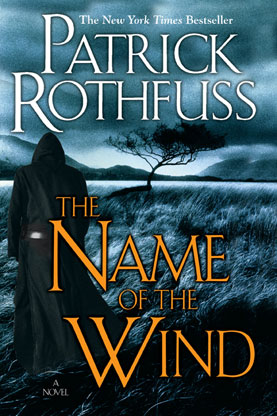
The Name of the Wind by Patrick Rothfuss

For Isaac and Garrett.


1. Rothfuss tells this story mostly well. The story is interesting, with a satisfying number of things going on. Each chapter adds to some part of the narrative. There are various interesting characters and experiences. But some aspects feel like a foregone conclusion. For instance, the main character makes a few claims that things don’t work out like they do in a story—but they totally do here: Denna’s attraction to Kvothe surprises nobody except Kvothe; Kvothe’s slaying of the cow-beast thing works just like it has a hundred times before in books; everytime Kvothe is down to his last penny, some stroke of luck grants him reprieve from starvation. These lucky breaks annoy me a bit, as do his wry observations about storybook tales being constantly undermined. However, they manage to stay just this side of deus ex machina: the beast being killed accidentally and costing Kvothe much more than he anticipated, getting a whole silver talent as a beggar then getting it beat out of him, running into and losing Denna again and again. Rothfuss keeps the tale from relying too much on deus ex machina, but still manages to weave some surprise into the novel. This is done passably, but in all, the story is pretty good. I enjoyed it and it certainly kept me reading. It was exciting without a big body count, and that’s refreshing.


2. The structure of the story is pretty interesting. There are two timelines going on: the present-day and the past. In the present, the area Kvothe lives in is nebulous and torn apart by wars and weird creatures, while in the past the tale shows young Kvothe growing up. I assume that at the end of the third book, these two storylines will meet. But this allows Rothfuss to drop hints and foreshadow heavily. For instance, we know at one point that Kvothe will kill a king, get expelled from the University, and lose Denna irrevocably. But at this point, we don’t know why or how or when any of this will happen. This helps add to the way the book keeps me reading. The heavy foreshadowing shows this book for what it is: pulp fiction. But the structure is interesting and really works well.


3. Rothfuss even foreshadows that the tale is switching from present to past and staying there for a long time in the way Kvothe warns Devan that the tale will take three days to tell. This switch is a real risk for the author. It occurs around twenty percent into the book and it’s a major shift: basically restarting the book with new characters in a new place, changing the tone entirely, and not referring back to the present day world he’s already built explicitly. This is a real risky point where Rothfuss could’ve lost the reader easily, but he uses three pages to explain Devan’s appointment and Kvothe’s unwillingness to adhere to Devan’s time schedule. This explains to the reader what is coming. From there, the narrative is mostly in the past, with brief interludes into the present timeline. It’s well done.


4. Unfortunately, the writing is poor. Well, that’s not entirely fair. The writing is fine, but it’s pulp fiction writing. This novel won an award for Young Adult literature and Rothfuss’ vocabulary is limited, but not overly so. He even tries his hand at a few interesting tactics: specifically some nice repetition and some consonance. So it’s interesting for me to read as an adult. But I can also see my teenage boy self liking it more than I did.


5. One area where he steps away from traditional pulp fiction is in his characterizations. Nobody is perfect, nobody is wholly evil. The Fae are humanized by Bast, while Denna has a crooked nose. She is the love interest and, as such, Kvothe looks at her through rose-colored glasses, but Kvothe’s friends point out that she is cruel and has a crooked nose. She’s not perfect, and neither is Kvothe, and that’s a positive for the story. It somehow feels more honest, even with the storybook aspects Rothfuss has in there.


6. The theme seems to be some sort of call to find the silver lining in everything. I mean, this seems to be Rothfuss’ conclusion most of the time. Kvothe decides to be satisfied with how much time he gets to spend with Denna. He is satisfied with his paltry rainy day fund while homeless. At college he isn’t satisfied with being banned from the Archives, but he finds ways to work with it and doesn’t let it eat him apart. His whole family is murdered and he finds a healthy way to deal with it—it even teaches him about other people in a very important way. I guess this list shows that the theme is more about how to handle what life throws at you and turn all to your advantage, no matter how small that advantage. It’s about the importance of turning a negative into a positive, owning your faults in the sense of learning from them and when to allow them, and keeping a positive attitude.


7. I have some friends who consider this their favorite book, and I can see that. I know I have said some critical things so far, but it’s a cracking read and a good book: very exciting without being overly violent for the built world, and it kept me reading way past my bedtime. It has enough going on, enough threads to keep me reading. Being interested in the story and world from reading this book, I will be immediately reading the next one. This one is a good book.