Showing posts with label Imperial Radch Series. Show all posts

29 October, 2015

Ancillary Mercy by Ann Leckie

[Added 5/16/16: 0. Well, as of 26 April 2016, the nominees have been announced for the 2016 Hugo Awards. Five novels were nominated. I am reading through them all so that when I vote, I’m sure of why I think that one is better than the others. I understand the inherent ridiculousness of this—it is simply a popularity contest, after all. But I find it fun to explore new-to-me novels and writers, and learn from their works. The nominees are: Ann Leckie’s Ancillary Mercy, NK Jemisin’s The Fifth Season, Seveneves by Neal Stephenson, Jim Butcher’s The Cinder Spires: The Aeronaut’s Windlass, and Uprooted by Naomi Novak. Next up, Ancillary Mercy is my favorite in Leckie's trilogy because of the balance of characters, the pacing, and the writing.]


1. The theme of this one both continues the theme from the other two books—what is human and how to work with humans, respectively—but also completes and dwells on a thread running through them: autocracy is crap. This theme is both a theme on it’s own right—I do get the sense that Leckie is anti-autocracy—but it is also referencing science fiction as a whole. As Leckie herself talked about on a panel I attended at this year’s Worldcon in August, 2015, science fiction is stuck in human history by consistently retaining aristocracies, imperialism, regencies, tyranny, and other feudal and unequal methods of organization or power. After finishing, I was surprised by how closely my notes and memory from Leckie’s comments aligned with what I think she did here. Leckie really cares about science fiction and wants it to be better. And here at the end she sets down some of those tropes and clichés that people were annoyed with in the first book—and this setting down is where her theme comes out most apparently:
“Only," I pointed out, “because that had been the normal, expected state of affairs for three thousand years before you were born. You never had a reason to question it. Anaander had real power over your life and death, and no personal regard for you, or anyone else you care about. We were all of us no more than counters in her game, and she could—and did—sacrifice us when it suited her.”
As you can see from the example above, which is surrounded by pages and pages where similar thoughts are echoed, Leckie does get a little too preachy for me. But I think her egalitarian theme is successful. It also completes the other themes she has running through all three books: by the end, the AIs are being considered a separate intelligent species as well—tying up the "what is human?" theme; and the theme of how to work together and compromise is completed by the negotiations with Anaander. This novel and theme really ties everything together so well.


2. While Leckie's plot allows her to get rid of some of the tropes and clichés, she takes her time setting them down, and she still uses some of them for her own purposes—uses them in new ways. But I think this is a strength of her storytelling: that she takes her time and doesn’t just drop them for the sake of disagreeing with them, instead she dismisses them in a way that makes sense in the world and story she has created. This feels honest to the work she’s already done here and, like I said before, it really ties everything off nicely. She leaves the reader uncertain about where the world is headed, but she remains character-focused throughout. So, though I am left pondering where the Provisional Republic of Eggs is headed, I am not confused about the characters. And that too shows how she stays true to her own work.


3. Leckie’s writing is still strong. I’m amazed that with such a quick publishing schedule she managed to keep the quality of the writing so high. She also had no glaring typos—none that I found at least. She is even more confident here in the third book, applying her substitutive voice to even more characters—Omaugh and Tstur stand in as the two halves of Anaander throughout. She uses dialogue questions more frequently in this book as a way to illuminate the thoughts of the characters during stressful situations:
“Who do you think you’re talking to, tyrant?” I asked. “What is there that I don’t know about obeying you? Or about human lives depending on ships and stations? And what sort of gall do you have, lecturing me about keeping human lives safe? What was it you built me to do? How well did I do it?” Anaander didn’t answer.
This embracing of questions shows her growing as a writer, becoming more confident and skilled. And it isn’t the only addition to her writing techniques. She has really grown as a writer throughout the series and I think her best writing is here, in the third book. This is great, as a reader, to watch a writer grow chapter by chapter, novel by novel.


4. Leckie’s pacing in this third book is almost perfect. I’ve had minor quibbles with her other books, but here she nails it. The first one ended too quickly, the second began too slowly, and this one is a bit too long at the climax—it’s hard to stay keyed up for as long as she seems to expect the reader to be. But she doesn’t draw out the end, she doesn’t spend time on plot points that don’t progress the story, and she keeps focused on her characters.


5. In the second book, Leckie introduced a translator for the Preseger, and that was a good character: a civilian with a sense of humor and a strange outlook on the world, or understanding of it. Another translator arrives here in the third book. This character adds a good foil to the ever-serious Breq and its lieutenants. Translator creates a space to breathe a bit and even laugh at times. It helps the reader take in the more serious and stressful aspects of the story, by having the translator there. I feel like in the second book Leckie didn’t yet know what the translator could do, while in this one she realizes what benefit it adds. But it’s not a surprise—this character is planned and its addition has serious consequences for the story and the other characters. Everything Leckie does matters and feels honest to the tale, and for that, I think she is a good storyteller.


6. One problem in here is a problem present in all three that I haven’t yet talked about: the characters often speak in a similar voice. The translator is distinct, but due to the regimented language—necessary for her ideas about culture to hold water—the rest of the characters do not really speak distinctly. Sure, they’re military and some of this is due to their training and the requirements of ship-life. But even Celar and Uran, two civilians, seem to fall into the same patterns as well. And this requires Leckie to explain speakers' emotions in a way that could dangerously slow the narrative. But this is just splitting hairs because Leckie is able to evocatively explain character emotions so concisely that it ends up working almost every time. The characters share a shown voice, but Leckie is able to break them out of that voice through telling well and now, at the end of all three novels, I’m regularly guessing correctly what a character is feeling or thinking when they speak.


7. And that’s the end of the series. Leckie got better as a writer and storyteller throughout. This series makes science fiction better by skillfully thinking through so many ideas and tropes that have become ruts within the community. She expands them and uses them her own ways. However, she also includes a lot of them. This series is a character drama couched in a military space opera that involves the end of an empire. These are big science fiction threads and I’m sort of wondering if she just threw everything into it because it was her first novel series and she wanted to do it all. I wonder what her short fiction is like, what she would be like to read if she was more focused. That said, she pulls most of it off, like 90%ish. Especially here in the third book. This one will probably have my vote for the Hugo award next year. In the end, I'm excited for whatever she does next.

22 October, 2015

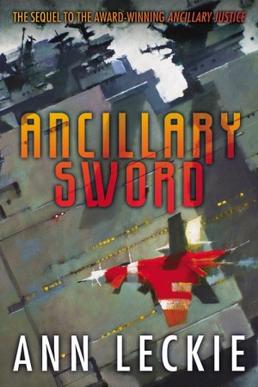
Ancillary Sword by Ann Leckie


1. The writing in here is very strong. It’s always nice to see an author improve—like George RR Martin did through the first book of his series, A Song of Ice and Fire. Here, Leckie is more confident in her writing.
—This comes across through her allowing the fractured perspectives of the main character to be more sudden and potentially jarring. But she uses an introductory sentence typically to set the new scene. For instance:
“Speaking of mushrooms. Shall I send Nine out for something to eat?"
On Mercy of Kalr, Seivarden sat in the decade room with Sword of Atagaris’s Amaat lieutenant.
Here, a simple paragraph break carries the weight of the shift in perspective, but also allows the reader to understand that the main character, the AI Breq, is watching the new scene through its implants and it is not physically present. This understanding comes through the context and world building.
—Leckie also allows the action to be, as the old adage goes, “hours of boredom punctuated by seconds of terror.” I do not at all want to imply that this novel bored me at any point: it didn’t. It is driven by character development and Breq unravelling the mysteries of the system it has been sent to. But when the action does occur, it’s often quickly described, giving the reader a sense of its speed and suddenness, followed by reflections on the action. This is a strong tactic to give the reader a sense of the mental speed of the characters—fast during the action, and slower rumination during the reflection. It’s akin to her tactic used throughout here and the first book with technology—name dropping first, then, after the scene is over, explaining some of the technology.
—The third tricky tactic the writing does successfully is sudden shifts in situation. This is best explained through an example:
[Hetnys] had walked about halfway across the shaded green and gray yard, was directly in front of that curving end of the bathhouse window when the bomb went off.
Here, Breq has just had a stressful conversation with Hetnys, which Hetnys extricated herself from awkwardly through a lie, when the sentence above occurs. The reader is reeling from the implications of the conversation and the way Hetnys felt the need to get out of the conversation so suddenly and falsely, and the bomb took Breq unawares—and the reader.
Through all three of these tactics, the reader is given a sense of the characters and the situations through the writing itself. This is strong writing that is often pulling double weight—both describing the situation while building characters through the specifics. Leckie is good.


2. One annoyance is that the novel’s first hundred pages or so are a bit slow. Though some important things happen, they take a while to happen and I feel like some of the situations do not entirely payoff as much as the time required to read them. I think the pace of the rest of the pages in this three hundred and fifty page book is stronger than that of the opening few. This doesn’t apply to the opening lines themselves: they carry forth from where the last book left off wonderfully, without resorting to an initial murder—thankfully. There is a sort of murder in the first hundred pages, sure, but by the point it occurs I already care about the writing, characters, and situation—allowing me to understand the import of the situation before it occurs. However, the first hundred pages plod a bit. This annoyance quickly passes though, as situations and characters gain import through reader familiarity and more information given. And yes, those first hundred pages set up the import, but I still can’t help feeling they could’ve done so more efficiently without losing effectiveness. My impulse would’ve been to keep that length, but add two more important actions to that section—there are already two important actions there: the murder thing and the complicated arrival at the new system. But I think two more would’ve worked: perhaps delving more into the medical procedures Breq went through, or a summary of the short bit of story between the two novels. What happened in that palace? What was the fight really like? I’m still curious about the space between the two novels.


3. However, I think Leckie’s pacing of the whole book is very interesting: she limits herself to a little over two weeks in these characters’ lives, yet so much happens that the character development is not empty. She does this through beginning in a time that is already important to the characters—the end of the last novel ensures this. But she also stays away from flashbacks. Instead of relying on flashbacks to give import and spark reader interest, she stays away from them, which allows the scenes to have an immediacy that is endearing. It feels like these scenes are all that matters. And I guess, when I’m in the now, I often act like now is all that matters. This works for her and helps her pacing really pull together for the large majority of the book. She also sticks to only a few places within the world: Garden, Undergarden, Governor’s Office and the concourse outside it, Mercy of Kalr and its shuttles, and the tea-growing compound on the planet downwell. This low number of places allows the reader to really focus in on the characters, their development, and the actions instead of being constantly distracted by new place descriptions. Also, this is straight narrative, not the two-storylines she used in the first novel. She writes straight narrative well through having so much character intrigue going on that it never really lags—other than those first hundred pages. Yeah, not a lot of physical action happens through parts of the novel, but the political maneuvering keeps me reading and interested.


4. Leckie wonderfully expands the world-building in this novel. Here she uses the same tactic she did with technology in the first novel—name-dropping it, then explaining it with a few short sentences later—but expands it to include culturally significant events. For example, by this point in the story I’m pretty interested in the Radch itself—the Dyson sphere, not the culture—so she gives a few more hints into it through the technology and artifacts she describes. An early faction in the Radch, the Notai, is mentioned, then elaborated through three technological instances: the tea set, the shuttle’s storage locker, and the ship. I think this expansion of the tactic shows Leckie growing as a writer. It also shows how she continually focuses on the characters, but doesn’t leave the world-building bereft: she foreshadows in a way that avoids deus-ex-machina techs being introduced merely to serve the immediate needs of the characters. She avoids that cheap writing tactic by foreshadowing and remaining focused on the characters. Her world building has improved: she is better at it here than in the first novel.


5. Leckie still uses the personal pronoun “she” throughout, but now that Breq is a captain, the author also uses “sir” for people of all genders who are in command. In this way, using both a masculine and feminine pronoun throughout, she effectively communicates the genderless nature of the language brilliantly here. This seems a big improvement. Not only does it appear to be more even-handed and honest through using a sampling from both genders in language, but it's also more effective at communicating the genderless language through the contrast between using both a masculine and feminine word: it’s jarring the first time Leckie uses “sir”, just as jarring as it was in the first book when she called a male character “she”. The last book worked, but this works better. Yes, I understand the last book didn’t afford that many opportunities to use “sir” due to the plot, but perhaps it could have done something similar with a similarly masculine word.


6. Leckie’s voice requires the reader's attention. Something like John Carter of Mars can be skimmed and still mostly grasped. But here, Leckie has three things happening that, in combination, require the reader to pay more attention:
—She uses a variety of word choices. No real changes here in her word choices—still above average, but not too obscure, like in the first book.
—She varies the sentence structures wonderfully—it’s not all noun-verb-adjective-noun-conjunctive-adjective-noun. She has clearly grown here, become more confident and comfortable with her variety.
—She also uses a heavily substitutive lexicon that includes a large number or pronouns and titles that suggests the reader slow down and parse it out. She finds a beautiful balance in substitutes that’s not annoyingly over-the-top, but is wonderfully both repetitive and varied. Rather than calling Breq by its name throughout, Leckie uses its titles—captain and fleet captain—its surname, its past titles—like Justice of Toren—and contextually significant substitutive words. This variety wonderfully expands the possible ways that Breq is referred to—which might be a necessity with how often characters are named due to the fractured narrative that quickly shifts from character and situation to character and situation. In my own writing, I tend to shy away from “he said” or “she said” as the direct repetition of that so often used phrase can be mildly annoying to me as a reader, and mildly boring to write. Here Leckie applies this same shyness to the ways the characters are referred to. This wonderfully varies the word choice throughout. But it does require the reader to slow down ever so slightly and pay attention just a touch closer than most voices do. This small slowing also allows readers some space to keep their mind background mulling over the situations and characters in the book. This space and simultaneous light-rumination helps readers understand the subtlety Leckie uses in her narrative and voice, helps readers understand the import and implications of what is factually presented in the novel. Personally, though she pulls it off well, it’s not something I would yet find necessary in my own work, but it sounds like a lot of fun to work with. I’ve just seen it fail so many times before, seen it become an unintelligible mess requiring a notebook on the side for the reader to keep track of who is who and what they're called, that I’m wary of trying it. An example of this substitutive writing done wrong would be Napoleon and his Marshals, which is a slog to read at times. Leckie succeeds at it though, through having a limited number of important characters, which Napoleon certainly didn’t have, and through limiting the number of titles or references.


7. The theme here is learning to live with a duty and a personal goal that might not fully mesh together, but finding a way to make them work simultaneously and still achieve both. Anaander attempts to twist Breq’s ambivalence into an asset by sending it to a duty in a place Breq actually wants to be, outside of the influence of Anaander. She allows Breq to travel there, but only if Breq does something for her—security in the system. Breq then murders a safeguard Anaander put into place that Breq didn’t agree to and wasn’t supposed to discover. Then Breq completes the task—and it isn’t some easy one: Breq overcomes big difficulties while actually attempting to complete the duty. Breq spends a lot of effort and time on its duty. But Breq does so much more that Anaander didn’t really intend and probably doesn’t want: it twists the intentions of Anaander to its own purposes. This basic plot outline shows the theme of the novel: working with difficulties and allowing them to influence oneself, but also making sure to keep the personal goal always in mind and, if possible, killing two birds with one stone. An example would be if a judge was supposed to decide if a personal friend got the death sentence or not. Breq is put into these conflict-of-interest situations, like we all are, and is forced to face up to them and try its best. I think that this is the main theme here, but certainly not the only one: Tor.com suggests that the book is “an extended meditation on power, and identity, and morality.” And this is a valid way to view the book. Identity makes the most sense because “what is a human?” is a major question: the Preseger can’t distinguish differences between humans; pre- and post-annexation humans are vastly different; each system in the culture exhibits slight cultural differences—like the male genitalia festival; the various cultural groups encountered are seen as varying levels of human—the harvesters are seen as sub-human effectively, though lip service to their inherent humanity is given by most; as well as Tisarwat and the ever-present ancillaries—Breq is made a human citizen from an ancillary, the translator, Breq’s crew that apes being ancillaries, and the captive from the Ungdergarden all approach this question. But I feel like this theme is carried over from the first novel, so the new theme, finding a way to complete public duty and personal goals simultaneously, stands out more to me. But it might just be my time of life that gives this new theme predominance in my mind.


8. Leckie is bad at attempting to introduce new readers to the story. She uses awkward sentences to remind old readers of the events of the first novel and introduce new readers to them. I think these type sentences are typically bad: most writers are bad at this. But Leckie uses sentences that stand out from her voice. They’re not terrible, they’re just not up to the quality of the rest of this work. They don't fit in her voice. I think George RR Martin does this the best that I’ve read in a long time. At this year’s Worldcon, Leckie and Martin were sitting on a three-person panel before the awards ceremony, discussing the Puppy Wars, or whatever that kerfuffle was called. Leckie could learn from Martin here. I think Martin does it through trusting the reader to remember most of it, then using one, maybe two sentences to recall the prior plot points. His sentences also usually show something that wasn’t shown before: how a character felt about an event, what changes an event had on a character and why, or the affects that event had on the world. Leckie's sentences are simply recap. Ugh.


9. A few short thoughts to close with:
—Leckie uses her descriptions well, though the descriptions themselves are good, not spectacular;
—if the next novel ends with Breq being faced with death-by-vacuum I’m going to be more than slightly annoyed—she uses such a wonderful variety of words, sentence structures, and character motivations that another ending almost-death-by-vacuum felt a little cheap, she'd already used that threat before so it lacks some effectiveness here;
—her plot is convoluted in a legible, interesting way;
—she’s good at making Breq seem intelligent without relying upon deus-ex-machina reveals that the reader couldn’t have figured out, like Foundation, or an over-abundance of set pieces;
—where the last novel made science fiction better by doing space opera well, this one does it by doing character drama in space so well;
—and I am excited to read the next novel, which came out this month.

10 October, 2015

Ancillary Justice by Ann Leckie


1. To tackle the big one first, Leckie uses the personal pronoun “she” throughout to refer to everybody. This makes sense in context though, because the main character is mentally genderless and exists in a culture that is mentally genderless and uses a genderless language. The main character is a piece of a ship’s AI, an “ancillary”, so it is genderless. In the culture, gender roles and traits, such as long hair or makeup, are entirely mixed up and the language reflects this by being genderless. So, instead of using “it” and “they” throughout, Leckie uses “she”. I think this actually works: Leckie probably should use “she” or “he” in order to retain the personality and relatability of the characters, but she also uses it to communicate the humanity of the main character, who goes by Berq through the last two-thirds of the novel. However, if she is trying to make a point about gender identity in our culture, I think it’s slightly unsuccessful. Yes, it is jarring to hear a character use “he” in dialog, and I assume this is Leckie’s way to point out how jarring it is to read “she” in a novel of predominantly male characters. But those readers who would understand her gender-writing argument and give it a good thinking over, I think these readers are likely already there with her, and this novel probably won’t convince anybody new. This tactic is strange and unfamiliar, as a reader, but it works well to illuminate the unusual genderless nature of the culture. Without this, the strangeness of this specific genderless culture would've been much harder to communicate. So for me this tactic works, but not necessarily as a critique of our gendered language today.


2. Outside of this personal pronoun tactic, which helps build the world, the rest of the worldbuilding is strong. She introduces technology and organizational concepts through name-dropping, leaving specifics as mysteries, before explaining them later when it becomes beneficial to the story to do so. Rather than intro-info-dumping, she uses a noun to name a technology, than uses the explanation later to describe its effect on the story or characters. This is long-term world-building: it comes off like she has this planned out from the start. For instance: the title, Ancillary Justice. Both words in the title exhibit this tactic. The main character is an ancillary of a Justice, a troop-carrying class of starship. Within the first two chapters, these two words are fully explained, but not in an info-dump such as, “Ancillaries are physical representations, parts of a ship’s AI embodied in a human body that are capable of acting outside of the ship to great distances.” Rather, the first chapter explains this through showing instead of telling, and Leckie does it very well. She only shows how the technology affects the world, characters, and plot, keeping away from made up back story or discussing unimportant aspects of the technologies. She uses this noun-first, deferred explanation tactic throughout to explain most of the technologies and aspects of the world that contribute to building the reader’s conception of this culture and world. Her technique successfully illuminates the world, even though it doesn't give the reader all of the information about all of the technologies: certain things are left mysterious and not fully explained.


3. The writing itself is solid. There are some beautiful sounds in here, but it’s more her efficiency that astounds me. She manages to say so much through her evocative word choices. This isn’t an eight-grader’s vocabulary mated to standard sentence structures that repeat themselves. Various words and sentence structures keep the reading interesting. Here is a passage that I found beautiful:
“I had no information about her internal state. She seemed calm. Impassive, emotionless. I was sure that surface impression was a lie, though I didn’t understand why I thought that.”
This is efficient and beautiful prose that does well by being wrinkled with world-building import. For instance, the point-of-view character in the example above can read any internal physical data for some of the characters, but feels unsure of itself when this information is unavailable—like in the sentences quoted. The vocabulary is above an eight-grader, but not obscure, not too far into the thesaurus. It’s a quality, fun read.


4. The structure of the story effectively pulls the reader along while simultaneously communicating the backstory and history of the world. The structure starts at a point we’ll call now. The next chapter begins about twenty years in the past. The chapters then alternate from now to past to now to past for two-thirds of the book before the past storyline is completed and only continued through the now taking over the novel and driving towards the end of the story. This allows Leckie to focus on important moments of the past without needing to be linear in the past—it allows Leckie to skip large spans of time in order to focus on important points, allows her to bridge gaps in the past or now narratives where nothing important happens, keeps the novel from needing filler. She also skips a good eighteen years or so of the past narrative because it doesn’t matter to the story: we understand what happened between nineteen years ago and now because of what now is like. The chapter breaks effectively fracture the twin narratives, letting her focus on important parts instead of worrying about every scene change. It’s a good structure for this story and Leckie deals with it deftly. Outside of this, when the Justice's AI is whole, she shatters the narrative between different viewpoints of the Justice in a way that at least equals the skill of the third chapter of Alduous Huxley's Brave New World. Leckie jumps from point-of-view to point-of-view in an interesting, confident way that illuminates the character of the Justice's AI, all while retaining legibility well. She is a strong storyteller.


5. Leckie uses the structure described above to pace the story perfectly. Each chapter begins on a slower note and builds action through to the end—sort of. Chapters generally have two major action points, with two portions of rumination—sometimes taking place in the middle of an action phase. This allows each chapter to be fairly self-contained and Leckie rarely relies upon cliff-hanger chapter endings to drive the reader to keep reading. Instead, her chapter structures and consistent chapter length allow the story to be told in a slow, self-contained way that reflects the way the main character would think through the story, conscious of its mental limitations as an ancillary, a part of itself, not a whole being, but a mere single human, and not even that.


6. One fault is that the novel, like so many other speculative fiction novels, begins with an apparent murder. Yes, she subverts this typical tactic, but it’s still an annoyance in the first line:
“The body lay naked and facedown, a deathly gray, spatters of blood staining the snow around it.”
So many speculative fiction stories do this—start with a murder or rely upon violence to change the characters or progress the plot—that it gets tiresome as a reader. A little more variety would be nice. Here though, like in China Mieville’s The City and the City, it works. It works here because it’s a familiar reference point to start the story at—something recognizable before the world building brings the strangeness in; because it’s used skillfully—even though I don’t yet care about the characters, world, or writing, this situation allows the main character to be introduced sympathetically; and because Berq’s response to this body is an important aspect of her character that continues to be important throughout the novel—like in Mieville’s novel, the body is not forgotten, it exists in a context, and it grows in importance and complexity throughout the novel. So this opening murder works because Leckie has thought through it and uses it in an interesting way rather than as a cheap writer's trick. But it’s still initially annoying.


7. Leckie has obviously thought deeply about this world. For instance, one of her ideas is that ship and station AIs are programmed with emotions in order to prioritize data, experiences, and commands. This allows negatives—there are legends of ships going insane with grief when their captain dies—but also positives in that the ships more inherently understand their human crews and captains because they can understand their emotions intuitively. This example shows that Leckie has thought deeply about the issues inherent in earlier AI stories within science fiction. She has realized that the emotionless AI is problematic through misunderstanding the humans who work with it—when working together, communication and understanding are key, and many tensions in earlier science fiction stories arise from this lack of basic understanding of emotional context. Here she takes science fiction forward. Like so many others, she's using AI characters as centers of tension in the novel. But Leckie's doing it in a way that is distinctly her own. And most of the ideas in the novel are deeply thought through like this.


8. Leckie’s deep thinking about what other authors have done in the field shows a characteristic of her writing that some readers appear to have disliked: this is space opera. Some people are annoyed with some of the tropes and tactics that space opera typically engages, and they were annoyed by this novel. I was not. My bias is that I think all genres of music are interesting and I’m happy to listen to “Little High Plains Town” by Ian Tyson right after “Alfadanz” by Burzum—because they are both quality songs despite their widely different genres. I'm the same with writing. So the fact that a novel is space opera doesn’t annoy me unless it’s bad space opera, unless it is being used by the tropes and characteristics as some sort of catharsis for the author’s personal wish fulfillment. To me, this novel is good space opera. Leckie isn’t indulging here. She’s thinking deeply and modifying characteristics and tropes to inform the reader about the characters and world. The example above about emotional AI proves that Leckie is using the tropes and traits, but she's expanding them, modifying them, not being used by them or using them thoughtlessly. She’s writing in a way that makes sense to her story and characters here, and some of it seems to fall near some tropes. And that’s fine by me because she’s doing her own thing with them, expanding and changing them, not re-doing what other authors have done. However, it could be a bit baffling to non-science fiction fans because it is drawing from other texts. But I don’t think it’s possible the novel is entirely baffling to a new science fiction fan. I think a new science fiction reader would need to put in more effort than an old-hand, but it’s still legible and effective.


9. If you can’t yet tell, I think this book successfully tells an interesting story. Leckie writes well, structures the story well, consistently paces the novel, and deeply thinks about interesting ideas. I really appreciate the craft and care and thought she put into writing and structuring the story and characters. I cannot overstate how refreshing it is to read a well-written speculative fiction novel. Her training and study at a writing school shows here. This would've been a New York Times best seller if it didn't draw so heavily from the history of science fiction. This is confident, good writing and storytelling. She knows what she’s doing. She focuses on the characters, yet the overarching plot and world lives up to the strength of characterization throughout. With my past university studies into literature, this good writing breathes freshness into speculative fiction, reinvigorates my love for what a well-done speculative fiction novel can do when it really is novel. This leaves me applauding the writer, appreciating her craft, and pondering the ideas she presents believably in the text. This debut novel strengthens science fiction.

[Added 10/26/15: 10. The theme here is "what is human?" At the end, an AI in a human body gains some of the trappings of humans by gaining a surname. But really, this questions is shot through the whole book.]