Showing posts with label Short Story. Show all posts
02 July, 2019
Tales from Earthsea by Ursula K Le Guin
This wonderful author wrote two beloved series that both prominently feature collections of short stories. This is the fifth book of Earthsea, and it’s a collection of short stories. That’s an unusual tactic. But I think that the short story, novella, novel, poem, play, and essay all have their own strengths. I also really enjoy short stories—China Mieville, Isaac Asimov, Raymond Carver, Franz Kafka, Sherman Alexie, Ray Bradbury. Two questions guide these notes: why use short stories, and should this book stand alone?
1. Why short stories? What does Le Guin use this form to do? Pessimistically, short stories aren’t strong enough to stand on their own, they become a sort of fan service collection of lesser quality work, thrown away ideas. Optimistically, the concise form allows the author to focus on a single theme more, or, in this case where the short stories are part of a larger world, they can deal with characters that are not essential to the main stories of the world.
Here, Le Guin writes five stories, along with an introduction and the pseudo encyclopedic “Description of Earthsea”. These tales tie into the stories of the novels sometimes, and sometimes start their own stories. They run the gamut from historical context to origin story to small love story. And it is that variety that I love the most about this book. Rather than writing “Five Adventures of Ged”, she has taken the opportunity to flesh out her world significantly. Before this book, I thought of a small Earthsea. After this book I thought of a larger Earthsea, and I think that’s useful to the point of the book.
The five stories are:
“The Finder”: The original founding of Roke was done by women and men together, rather than the men-only tale that the school lies about now.
“Darkrose & Diamond”: A wizard of great potential gives it up for the love of a woman.
“The Bones of the Earth”: Ogion learns his greatest spell from a woman, and learns to despise Roke’s male-dominated nature—explaining why he isn’t archmage and why he looks with measured disdain on Roke.
“On the High Marsh”: A man seeking power was thrown into exile, this describes the exile and shows how he is redeemed by love.
“Dragonfly”: And the fifth tale is the epilogue to Tehanu, the novel that precedes this book, and the introduction to The Other Wind, the novel that succeeds this book. In this story, a woman who is part dragon gains access to the male-only college of wizards on Roke.
The first one fills in some gaps in Earthsea lore. By showing the importance of women to the early school on Roke, Le Guin changes the way I think about the characters in the novels. Gone is some of the awe for the wizards, as their petty superstitions about women get in the way of the true balance they are constantly paying lip service to.
The second story is one that wouldn’t fit into a novel easily—its length means that it wouldn’t work as an aside, and its content relies upon that length for power. Yet it’s just a small love story in some ways, and not complex enough to justify centering a new novel around it. So, this story perfectly works as a short story exploring an alternate Ged, one who fell in love with a girl and regrets giving it up for the power of magic.
The third story chronicles one of the legendary deeds attributed to Ogion in the novels—stopping the earthquake on Gont. Yet, by looking at it in detail, we see the network of friends who were essential to Ogion’s deed, especially the woman who sacrificed herself, selflessly knowing she would get no credit. This story probably could have fit into the first novel, or the third, or the fourth. But the short story form allows the writer to focus on the themes and characters more, and spend less time drawing it together with the novels, in a way that makes this a powerful stand-alone tale of Earthsea. Though it helps explain Ogion better, it is also simply an exciting tale to read.
The fourth story is probably the best one. It takes an antagonist from the novels, after he has been defeated and exiled, and shows his exile and redemption. He loved power, was defeated, realizes his mistakes, and now experiences the power of love as a path to redemption. Ged, the man who beat him, shows up simply to show forgiveness. It’s a tale of self-forgiveness, dealing with mistakes, and love that simply stands alone better than the rest of the stories in this book.
The fifth story sets up the central questions of the coming novel. Yet, like the first story, it relies heavily on the surrounding context of Earthsea as laid out in the novels to work at all. These characters of the Masters of Roke are sketchy here, and their reactions are better understood when having read the other novels. Yet, for a short story, this would be a distracting aside in any of the novels except the forthcoming one. This could have been the opening chapter of the next novel pretty easily, but the narrative structure is so self-contained that it may have been quite awkward.
In using the short story form, Le Guin is able to focus on different aspects of these characters and her Earthsea world. In general, Le Guin uses these short stories to flesh out the world of Earthsea. Some of these tales insert women into places of power and importance in Earthsea. This is a sort of retconning—and to me this term does not have a negative connotation at all. Who am I to enforce that an author never change their mind? Here, we have an author who decided to put women into stories that were generally thought to be male dominated in the past.
2. The second question then is whether these stories stand on their own enough, or if Earthsea knowledge is necessary for them to work. My impression is that the answer is a mixed bag. “On the High Marsh” stood out to me, for sure, as a great short story in its own right. And its my favorite because it seems to exist as a story Le Guin wanted badly to tell, without reference to the novels—though that reference is there for people who read the novels.
The other two middle stories mostly stand alone. But they are so enhanced by prior Earthsea experience, that I hesitate to call them great on their own right. They’re good stories, but I think that knowledge of the context helpfully points out some of the contradictions that make these stories enjoyable.
However, the opening and closing tales are so dependent on prior Earthsea knowledge that they disappoint as stand-alone short stories.
I’m always struggling to review sequels, books in series. I mean, on the one hand they don’t often stand on their own, and I really want them to. On the other hand, they are written for a specific audience, usually one who has read the prior book or books. I will just say that this book works as intended. As a reader of Earthsea, this book worked for me. But it wasn’t perfectly satisfying either, as I wanted more stand alone stories, and less tie-ins.
Labels:
2001,
Earthsea Series,
Fantasy,
Locus Award,
Short Story,
Ursula K Le Guin
20 August, 2016
In the Slopes by China Miéville
0. "In the Slopes" is one of my favorite short stories from China Miéville’s short story collection, Three Moments of an Explosion, which I already wrote notes about here on this blog in September of 2015. Back then, commenter Boru raised a point that got me thinking about this story more. I find I want to dig deeper into this one story to exhume the tactics and tendencies that make this a favorite of mine. I want to learn from Miéville. But not being willing to go back to school to take classes from him, I have only his written works to study.
1. Miéville uses a third-person voice throughout. It focuses tightly on McCulloch, the character whose perspective the whole story follows—except for the few paragraphs after the reveal, where Miéville offers about a page of info dump. My question is whether his voice is as tightly focused as Cherryh’s typical voice. My knee-jerk response is that the two voices are similar. But how?
—I’ll start with an example—Miéville’s description of the island’s central volcano: “The dead volcano sat sulking, hunch-shouldered.” Here, Miéville describes the mountain without describing the concept of mountain anew. He doesn’t begin at the start, talking about piles of stones, magma in the crust, the Pacific’s ring of fire, etc—he simply states it’s a volcanic island and it’s hunch-shouldered. I understand that it’s a shield volcano, but I’ve no idea which ocean it’s in. And I don’t need to because it doesn’t relate to the theme. Additionally, the description of the mountain shows how McCulloch views the thing—I bet that Soph or Will wouldn’t describe it as “sulking”. In this example, Miéville’s voice reminds me a lot of Cherryh’s. The whole story uses this voice, not just that one example. I’ll give one more example to drive the point home: after reading this story multiple times, I’ve little idea what McCulloch’s shop looks like, or his home. And I really don’t need to. The details he does give—McCulloch watches TV while at the counter, the whitewash is peeling, and the door-bell is on the fritz—show the slowness of McCulloch’s business and life, as well as his character and priorities: he can’t be bothered to fix the bell or whitewash, maybe because of the slowness, maybe because of apathy.
—What I like about this voice is pretty simply explained: it does four things for the reader that I appreciate in prose. First, it trusts the reader to figure things out, rather than spoon-feeding all the information. Spoon feeding often comes off insulting, while this voice seems like Miéville trusts his own writing and his readers. Second, it focuses on the theme rather than focusing on the context—which keeps the ideas, characters, and story moving and changing quickly. Third, it helps explain the characters through showing what they notice. For instance, when McCulloch enters the bar, which he’s been in many times before, he notices everything anew because he’s looking for Soph and Will. That helps show his mental state. Fourth, and this is most important, it allows me to fill in the blanks with my own imagination. Like the old adage “don’t show the monster”, this tightly focused, third-person voice trusts that the reader will fill descriptions in with details more effective to themselves than Miéville could ever dream up.
—At the same time, Miéville allows himself a paragraph or two here and there—or a lengthy section like the info dump after the reveal—to break with the voice and add a little context. For instance, on page five Miéville describes a little more of the nature of the culture, from a narrator’s point of view, rather than McCulloch’s. But he focuses it all on why this information is important to McCulloch, rather than leaving it out there as unimportant details. And that narrator's voice shows how his voice is different than Cherryh’s: where she allows extensive interior monologue, he frames his breaks with the voice of a narrator who consistently refers back to McCulloch. If you squint, you could say it’s summarized interior monologue. In that fifth page example, these thoughts are not being thought by McCulloch in the now, but these past thoughts and decisions are influencing his actions in the now—it seems unlikely that he is rehashing the history of the island since he moved there, all while sitting in the bar with Cheever. So Miéville summarizes McCulloch’s past thoughts, as a narrator, placing that information right there because it influences McCulloch’s next statements.
—So, there is a difference between Cherry and Miéville’s voices: it’s only the slightest difference, but it is one I noticed. But in conclusion, the answer is mostly yes: Miéville and Cherryh’s tightly-focused, third person narratives accomplish similar goals through similar tactics. And they are both effective for me. They are not exact copies of each other, but they’re closely related enough that I think of them in the same vein.
2. There is a deep care and consideration put into every word. I would call it poetic—not primarily in the sense of the whole sounding beautiful and following syllabic or stress patterns, but in the sense that every word matters.
—The example of the mountain's description shows how that word “sulking” is doing double duty: describing both the mountain and how McCulloch sees it. Even something as throwaway as Soph buying a bag of chips comes back in later, multiple times, and ends up being important to McCulloch getting into the dig site, to Gilroy accepting him there, and to his role in the later events. A third example is calling the unknown intelligences “collaborators”, which first occurs on the second page, twelve pages before the reveal. I have no context for it, no reason to think he means what it ends up meaning. So I assume that he’s talking about the culture the archaeologists are investigating, I assume he's implying they worked together more than other ancient cultures—and he is, but in a way that gives the word new meaning and importance after the reveal. Before the reveal I think it’s an egalitarian culture, a friendly one; after the reveal the friendliness with beings so other to us gives the word a new context that still perfectly describes what the world believes about these cultures. It’s a perfect word-choice, both before and after the reveal, both in the first read and in a reread. I am massively impressed by that one word. And this one word is a perfect example of the care given to every word within the story.
—But Miéville doesn’t ignore sounds. Rather, there are places within the story where sounds are important to the structure of the paragraphs.
—This level of care and consideration is a ton of hard work, and I appreciate it whenever I can find it. These are stunning combinations of words, taken as a whole, but he doesn’t let the beauty run away with the tale—it’s still efficient and tight prose that communicates effectively. Miéville shows brilliant balance, coming down on the side of efficiency, but not letting that stop him from writing beautifully. For contrast, Asimov is efficient and never beautiful. I vastly prefer Miéville.
3. To build the world through this voice and writing technique, Miéville often implies instead of stating directly. Like the example of the mountain’s description shows, he implies it’s a shield volcano rather than outright stating that the island was formed from a shield volcano. The old name of the bar, “Cunny Island”, implies that it used to be a brothel or strip club; and it also implies something about the culture of the island’s residents and tourists before the archaeology really took off—an implication which ties into every other part of the story. The season is implied as being a week past summer weather when McCulloch is said to have packed up the beach balls and towels and packed them into the store-room; as well as with the line, “The municipality had just switched over to the winter schedule and, for a few weeks, the streetlights would start to glow pointlessly early,” a line that also implies something about the lackidasical nature of the island, the lack of precision and pace of life. The line “Friendly business competitors” implies the nature of the community of the locals now, after the archaeology ramps up. Stating that the fisherman are coming up from the bay implies something about the economics of the island without telling a detailed account of the economy.
—There is some groundwork directly stated in the way the islanders tend to preserve rather than exploit, and this is on page five. But even that direct statement implies a cultural baggage that is important to the narrative and world-building.
—In short, the story implies rather than describes the world, but implications are even in the direct descriptions.
4. This method of worldbuilding is clearly secondary to Miéville building his theme, which rests in the relationships. The relationships are not restricted to being between two people: Miéville’s relationships also include corporate ones. You can look on the complex relationships here as a family tree, each level informing the two on either side of it. For instance: the locals to the archaeologists, the archaeologists to archaeology, everybody to the collaborators; each of these relationships are reinforced through the specifics of individual relationships involved—Paddick’s relationship with archaeology differs from Gilroy’s relationship with archaeology, which is different than the locals’. Through the lens of those three relationships, a corporate relationship is built.
—However, the story is about McCulloch and his relationships to his past, the island, and other people—but again, the relationships are always interconnected, and these three categories of relationship inform and build his relationship with himself. And here is the crux of the story. Miéville shows McCulloch growing increasingly integral to his world and the people around him—that’s the plot, McCulloch changing from a disaffected semi-loner to a person who is an integrated part of his society’s structure. At the start he’s not “Johnny come lately” because he’s an immigrant, it’s because he is so disaffected. At the height of the drama he’s helping people, he’s interested and invested, and this all appears to be new for him—at least since he moved to the island. He is sucked into the whole situation by circumstance, happenstance, perhaps fortune, and it affects him. He’s watching Soph unravel before his eyes, and he can’t handle it. She knows what she wants, and now she’s furious and denied. It hits too close to home for him. He is disturbed by how affected he is—especially after the fact, after he gets a chance to step back and look at it all from the outside again. While everything dies down a bit, he ignores the phone calls and stays home in order to try and recapture his disaffected habit. But at the end, when Soph walks into his shop, he caves to his curiosity and sociability and accepts the connection, realizes he needs it. From here, will he continue to cut himself off, or will he integrate? I don’t know, but Miéville leaves us on his relationship with Soph, therefore he seems to imply that McCulloch gets back to his life while accepting a new depth to his relationships, a new need for sociability. In other words, the whole situation finally illuminates to him how interconnected he already is on the island, and he finally accepts it, somewhat. Or at least has a chance to. But he probably wants it on his own terms.
—And that relationship with Soph is never explicitly one of attraction. I don’t get the sense that this is a potential romance. I get the sense that he connects with her because he is still somewhat of an outsider, she’s friendly to him first, she can satisfy his curiosity, and later because he can help her and he shares her disappointment at Paddick’s actions. They are comrades, not potential mates, throughout.
5. The dialogue is spectacular. It’s really Brian K Vaughan level stuff. Miéville rides that line between the fractured, day-to-day reality of conversations in half-sentences, and the unrealistic literary dialogue that must always make sense in the retelling. This balance is done well and I feel like McCulloch and Cheever are fairly well-spoken individuals, but not outside the normal bell curve.
—Miéville shows that he is deliberate about matching his characters’ words to their mental states. For instance, when McCulloch arrives in Banto he doesn’t know where to go. In this instance, I would be a little nervous—he’s already shown he doesn’t know that much about Banto or the people there, and his need to stop and ask directions could induce nervousness. He's outside his comfort zone, but he’s also an islander, not a tourist. So he affects a casual, “I heard there was a dig somewhere,” and this shows his mental state spectacularly.
—But the mental states are not all shown. Miéville also tells. An example would be in the scene where he guesses Sophia’s name as Sophie and she corrects him: Miéville writes simply, “He was embarrassed.” This telling line informs McCulloch’s next statements, showing him putting on bravado to cover his embarrassment.
—The dialogue fractures even more when the emotions run high, when Soph starts shouting at Paddick. This change in the length of sentences, mixed with the word choices, drives home the drama of the situation for McCulloch and the reader.
—Through all this, Miéville stays away from explaining everything between the dialogue. Instead of paragraphs describing McCulloch’s embarrassment, he simply writes, “He was embarrassed.” This is a sentence, not a paragraph. It contextualizes more than it explains.
6. That reveal halfway through stunned me the first time. It’s on page fourteen. The first half assumes the reader knows, then they suddenly do know. They don’t know everything, but they know. It is effective for two reasons: first, it makes a reread enjoyable. On rereading I finally noticed all the mentions of collaborators in the first half, and saw how integrated they were throughout. Second, the casual, foregone conclusion tone of the reveal reiterates the tone of the story. It reinforces the focus on McCulloch’s life, but contextualizes just how disaffected he is. He lives in this place where the collaborators are a daily reality, and he’s still this disaffected. The collaborators are amazing! They’re unprecedented! They’re fantastic! They change everything about Earth and humanity. But they’re already commonplace to the islanders, even to a new one like McCulloch. Sure, he goes to see the exhuming, but only because it’s a notable one. And even there, he's sort of nonchalant about the whole situation, especially compared to the excitement of the archaeologists.
—The collaborators are just another piece of this story, McCulloch’s story. They’re the most fantastic context, but they’re not the point, like they would be in many other speculative fiction short stories. The collaborators are subsumed beneath the relationships of the characters. Sure, the archaeology is central to the characters’ lives, but the story is the characters’ lives. That’s why the archaeology is in here—to help explain the characters—not the other way around.
—The question here is whether the reveal overwhelms the story or not. The danger is that the reveal is too fantastic, distracting too much from the focus of the story on mundane McCulloch. It didn’t affect me this way because even the reveal is as nonchalant as McCulloch—reinforcing the story’s thrust in the heart of the distraction. But I can see a reader being overwhelmed by it. On rereads the focus on McCulloch was driven home more than on the initial read—I was less astounded by the collaborators when rereading. But that comes with the knowledge of the reveal.
7. In all, this story is memorable to me, and I hope it’s influential as well. The reveal certainly took my breath away the first time, as a writing tactic more than for what the collaborators are. But the dialogue, the world-building, the character of McCulloch, and the voice astounded me more.
1. Miéville uses a third-person voice throughout. It focuses tightly on McCulloch, the character whose perspective the whole story follows—except for the few paragraphs after the reveal, where Miéville offers about a page of info dump. My question is whether his voice is as tightly focused as Cherryh’s typical voice. My knee-jerk response is that the two voices are similar. But how?
—I’ll start with an example—Miéville’s description of the island’s central volcano: “The dead volcano sat sulking, hunch-shouldered.” Here, Miéville describes the mountain without describing the concept of mountain anew. He doesn’t begin at the start, talking about piles of stones, magma in the crust, the Pacific’s ring of fire, etc—he simply states it’s a volcanic island and it’s hunch-shouldered. I understand that it’s a shield volcano, but I’ve no idea which ocean it’s in. And I don’t need to because it doesn’t relate to the theme. Additionally, the description of the mountain shows how McCulloch views the thing—I bet that Soph or Will wouldn’t describe it as “sulking”. In this example, Miéville’s voice reminds me a lot of Cherryh’s. The whole story uses this voice, not just that one example. I’ll give one more example to drive the point home: after reading this story multiple times, I’ve little idea what McCulloch’s shop looks like, or his home. And I really don’t need to. The details he does give—McCulloch watches TV while at the counter, the whitewash is peeling, and the door-bell is on the fritz—show the slowness of McCulloch’s business and life, as well as his character and priorities: he can’t be bothered to fix the bell or whitewash, maybe because of the slowness, maybe because of apathy.
—What I like about this voice is pretty simply explained: it does four things for the reader that I appreciate in prose. First, it trusts the reader to figure things out, rather than spoon-feeding all the information. Spoon feeding often comes off insulting, while this voice seems like Miéville trusts his own writing and his readers. Second, it focuses on the theme rather than focusing on the context—which keeps the ideas, characters, and story moving and changing quickly. Third, it helps explain the characters through showing what they notice. For instance, when McCulloch enters the bar, which he’s been in many times before, he notices everything anew because he’s looking for Soph and Will. That helps show his mental state. Fourth, and this is most important, it allows me to fill in the blanks with my own imagination. Like the old adage “don’t show the monster”, this tightly focused, third-person voice trusts that the reader will fill descriptions in with details more effective to themselves than Miéville could ever dream up.
—At the same time, Miéville allows himself a paragraph or two here and there—or a lengthy section like the info dump after the reveal—to break with the voice and add a little context. For instance, on page five Miéville describes a little more of the nature of the culture, from a narrator’s point of view, rather than McCulloch’s. But he focuses it all on why this information is important to McCulloch, rather than leaving it out there as unimportant details. And that narrator's voice shows how his voice is different than Cherryh’s: where she allows extensive interior monologue, he frames his breaks with the voice of a narrator who consistently refers back to McCulloch. If you squint, you could say it’s summarized interior monologue. In that fifth page example, these thoughts are not being thought by McCulloch in the now, but these past thoughts and decisions are influencing his actions in the now—it seems unlikely that he is rehashing the history of the island since he moved there, all while sitting in the bar with Cheever. So Miéville summarizes McCulloch’s past thoughts, as a narrator, placing that information right there because it influences McCulloch’s next statements.
—So, there is a difference between Cherry and Miéville’s voices: it’s only the slightest difference, but it is one I noticed. But in conclusion, the answer is mostly yes: Miéville and Cherryh’s tightly-focused, third person narratives accomplish similar goals through similar tactics. And they are both effective for me. They are not exact copies of each other, but they’re closely related enough that I think of them in the same vein.
2. There is a deep care and consideration put into every word. I would call it poetic—not primarily in the sense of the whole sounding beautiful and following syllabic or stress patterns, but in the sense that every word matters.
—The example of the mountain's description shows how that word “sulking” is doing double duty: describing both the mountain and how McCulloch sees it. Even something as throwaway as Soph buying a bag of chips comes back in later, multiple times, and ends up being important to McCulloch getting into the dig site, to Gilroy accepting him there, and to his role in the later events. A third example is calling the unknown intelligences “collaborators”, which first occurs on the second page, twelve pages before the reveal. I have no context for it, no reason to think he means what it ends up meaning. So I assume that he’s talking about the culture the archaeologists are investigating, I assume he's implying they worked together more than other ancient cultures—and he is, but in a way that gives the word new meaning and importance after the reveal. Before the reveal I think it’s an egalitarian culture, a friendly one; after the reveal the friendliness with beings so other to us gives the word a new context that still perfectly describes what the world believes about these cultures. It’s a perfect word-choice, both before and after the reveal, both in the first read and in a reread. I am massively impressed by that one word. And this one word is a perfect example of the care given to every word within the story.
—But Miéville doesn’t ignore sounds. Rather, there are places within the story where sounds are important to the structure of the paragraphs.
Digs, development, and tourism were all controlled: the chamber of commerce constantly complained.All that consonance is an extreme example, but he also uses vowel sounds intentionally and to make the prose beautiful.
“How dare you, sir? I’m curious. Oh, for a sprinkling of the old Sodium Pentothol.” Cheevers mimed opening a compartment on his signet ring and pouring something into Paddick’s glass.In these two example, the prose’s beauty adds interest to the writing. And the story is better for it, for having this beauty. Not only is it yet another layer to dig into in this complex and beautifully crafted short story, but it also raises this prose well above the typical prose and shows how much hard work went into it.
—This level of care and consideration is a ton of hard work, and I appreciate it whenever I can find it. These are stunning combinations of words, taken as a whole, but he doesn’t let the beauty run away with the tale—it’s still efficient and tight prose that communicates effectively. Miéville shows brilliant balance, coming down on the side of efficiency, but not letting that stop him from writing beautifully. For contrast, Asimov is efficient and never beautiful. I vastly prefer Miéville.
3. To build the world through this voice and writing technique, Miéville often implies instead of stating directly. Like the example of the mountain’s description shows, he implies it’s a shield volcano rather than outright stating that the island was formed from a shield volcano. The old name of the bar, “Cunny Island”, implies that it used to be a brothel or strip club; and it also implies something about the culture of the island’s residents and tourists before the archaeology really took off—an implication which ties into every other part of the story. The season is implied as being a week past summer weather when McCulloch is said to have packed up the beach balls and towels and packed them into the store-room; as well as with the line, “The municipality had just switched over to the winter schedule and, for a few weeks, the streetlights would start to glow pointlessly early,” a line that also implies something about the lackidasical nature of the island, the lack of precision and pace of life. The line “Friendly business competitors” implies the nature of the community of the locals now, after the archaeology ramps up. Stating that the fisherman are coming up from the bay implies something about the economics of the island without telling a detailed account of the economy.
—There is some groundwork directly stated in the way the islanders tend to preserve rather than exploit, and this is on page five. But even that direct statement implies a cultural baggage that is important to the narrative and world-building.
—In short, the story implies rather than describes the world, but implications are even in the direct descriptions.
4. This method of worldbuilding is clearly secondary to Miéville building his theme, which rests in the relationships. The relationships are not restricted to being between two people: Miéville’s relationships also include corporate ones. You can look on the complex relationships here as a family tree, each level informing the two on either side of it. For instance: the locals to the archaeologists, the archaeologists to archaeology, everybody to the collaborators; each of these relationships are reinforced through the specifics of individual relationships involved—Paddick’s relationship with archaeology differs from Gilroy’s relationship with archaeology, which is different than the locals’. Through the lens of those three relationships, a corporate relationship is built.
—However, the story is about McCulloch and his relationships to his past, the island, and other people—but again, the relationships are always interconnected, and these three categories of relationship inform and build his relationship with himself. And here is the crux of the story. Miéville shows McCulloch growing increasingly integral to his world and the people around him—that’s the plot, McCulloch changing from a disaffected semi-loner to a person who is an integrated part of his society’s structure. At the start he’s not “Johnny come lately” because he’s an immigrant, it’s because he is so disaffected. At the height of the drama he’s helping people, he’s interested and invested, and this all appears to be new for him—at least since he moved to the island. He is sucked into the whole situation by circumstance, happenstance, perhaps fortune, and it affects him. He’s watching Soph unravel before his eyes, and he can’t handle it. She knows what she wants, and now she’s furious and denied. It hits too close to home for him. He is disturbed by how affected he is—especially after the fact, after he gets a chance to step back and look at it all from the outside again. While everything dies down a bit, he ignores the phone calls and stays home in order to try and recapture his disaffected habit. But at the end, when Soph walks into his shop, he caves to his curiosity and sociability and accepts the connection, realizes he needs it. From here, will he continue to cut himself off, or will he integrate? I don’t know, but Miéville leaves us on his relationship with Soph, therefore he seems to imply that McCulloch gets back to his life while accepting a new depth to his relationships, a new need for sociability. In other words, the whole situation finally illuminates to him how interconnected he already is on the island, and he finally accepts it, somewhat. Or at least has a chance to. But he probably wants it on his own terms.
—And that relationship with Soph is never explicitly one of attraction. I don’t get the sense that this is a potential romance. I get the sense that he connects with her because he is still somewhat of an outsider, she’s friendly to him first, she can satisfy his curiosity, and later because he can help her and he shares her disappointment at Paddick’s actions. They are comrades, not potential mates, throughout.
5. The dialogue is spectacular. It’s really Brian K Vaughan level stuff. Miéville rides that line between the fractured, day-to-day reality of conversations in half-sentences, and the unrealistic literary dialogue that must always make sense in the retelling. This balance is done well and I feel like McCulloch and Cheever are fairly well-spoken individuals, but not outside the normal bell curve.
—Miéville shows that he is deliberate about matching his characters’ words to their mental states. For instance, when McCulloch arrives in Banto he doesn’t know where to go. In this instance, I would be a little nervous—he’s already shown he doesn’t know that much about Banto or the people there, and his need to stop and ask directions could induce nervousness. He's outside his comfort zone, but he’s also an islander, not a tourist. So he affects a casual, “I heard there was a dig somewhere,” and this shows his mental state spectacularly.
—But the mental states are not all shown. Miéville also tells. An example would be in the scene where he guesses Sophia’s name as Sophie and she corrects him: Miéville writes simply, “He was embarrassed.” This telling line informs McCulloch’s next statements, showing him putting on bravado to cover his embarrassment.
—The dialogue fractures even more when the emotions run high, when Soph starts shouting at Paddick. This change in the length of sentences, mixed with the word choices, drives home the drama of the situation for McCulloch and the reader.
—Through all this, Miéville stays away from explaining everything between the dialogue. Instead of paragraphs describing McCulloch’s embarrassment, he simply writes, “He was embarrassed.” This is a sentence, not a paragraph. It contextualizes more than it explains.
6. That reveal halfway through stunned me the first time. It’s on page fourteen. The first half assumes the reader knows, then they suddenly do know. They don’t know everything, but they know. It is effective for two reasons: first, it makes a reread enjoyable. On rereading I finally noticed all the mentions of collaborators in the first half, and saw how integrated they were throughout. Second, the casual, foregone conclusion tone of the reveal reiterates the tone of the story. It reinforces the focus on McCulloch’s life, but contextualizes just how disaffected he is. He lives in this place where the collaborators are a daily reality, and he’s still this disaffected. The collaborators are amazing! They’re unprecedented! They’re fantastic! They change everything about Earth and humanity. But they’re already commonplace to the islanders, even to a new one like McCulloch. Sure, he goes to see the exhuming, but only because it’s a notable one. And even there, he's sort of nonchalant about the whole situation, especially compared to the excitement of the archaeologists.
—The collaborators are just another piece of this story, McCulloch’s story. They’re the most fantastic context, but they’re not the point, like they would be in many other speculative fiction short stories. The collaborators are subsumed beneath the relationships of the characters. Sure, the archaeology is central to the characters’ lives, but the story is the characters’ lives. That’s why the archaeology is in here—to help explain the characters—not the other way around.
—The question here is whether the reveal overwhelms the story or not. The danger is that the reveal is too fantastic, distracting too much from the focus of the story on mundane McCulloch. It didn’t affect me this way because even the reveal is as nonchalant as McCulloch—reinforcing the story’s thrust in the heart of the distraction. But I can see a reader being overwhelmed by it. On rereads the focus on McCulloch was driven home more than on the initial read—I was less astounded by the collaborators when rereading. But that comes with the knowledge of the reveal.
7. In all, this story is memorable to me, and I hope it’s influential as well. The reveal certainly took my breath away the first time, as a writing tactic more than for what the collaborators are. But the dialogue, the world-building, the character of McCulloch, and the voice astounded me more.
Labels:
2015,
China Miéville,
Fantasy,
Science Fiction,
Short Story
23 September, 2015
Three Moments of an Explosion by China Miéville
1. I certainly wanted more variety of structure. Short stories are where authors can try more with less risk of wasting a year on a crap novel: they can attempt new schemes and test sentence structures and throw it all away if it doesn't work, only having wasted a few hours of time rather than weeks or months. And Miéville does that here, somewhat. But at times he sticks rigidly to his familiar themes and styles: the unknown, barely glimpsed or heard horror understood by one character as necessitating flight, and by another as the other's irrational flight; the mid-story reveal of a deeper mystery that, though it's not what the story is about, subtly or wholly changes the setting or stakes; a discussion of how humans exist in a world where one significant thing is quite different and, to us, illogically so. These are good tactics and he writes them well. But this is a collection of 28 short stories mostly using these three tactics. I wanted more variety here, and didn't get it. For instance, the three italicized stories are transcriptions of video, and instead of trying this structure then moving on to trying other interesting new things, two more stories come along written as a video transcription. I wanted more variety, but the stores are mostly good: well-written and engaging, communicative of his subtext, and interesting.
2. What I like the most is that they remain focused on humanity. Mostly he examines the various ways we deal with the unknown and unknowable: our reactions, our reactions to our own reactions, others' reactions to our reactions, and how we react to their reaction to our reaction. This is what makes Miéville great: he goes that one layer deeper into what makes us who we are and how who we are reacts. With the fantastical, often unknowable setting or actions, this honesty about humanity grounds the stories and keeps them legible and applicable to human readers. No matter how weird, farfetched, or illogical it all gets, there are still humans and recognizable reactions. The themes here circle humans and the unknown, reaction chains and how we interface with the unknown and stay human with it. Like the three figured cast of "In the Slopes," which is probably a wonderful metaphor for the theme of the stories, the unknown comes and in their final act they pointlessly attempt protection, succeeding instead at love, trust, fear, panic, and acceptance of the fateful inevitability. The speculative aspects almost always affect the characters in interesting, recognizable ways. Miéville uses them as more than decoration throughout. But they are not the focus. Rather, they are a pivot point, or a metaphor, or a way to look at something in a new light initially undimmed by preconceptions. This is strong science fiction.
3. The other thing Miéville does well is allow readers to care before the plot really gets moving. We already care about Nick before we learn his condition. This effectively gives his illness import. This is rare: in The Caves of Steel, the initial murder is not inherently interesting or important or contextualized to the reader at all. So many speculative novels start with a murder that it's no longer gripping but cliché—like a D&D campaign beginning in an inn, or a film's external scene setting shot not informing the following scene at all. Miéville avoids this by beginning his stories before an important action, far enough back that the reader is able to guess at the importance when the action occurs, actually giving the action some import. This is both engaging and refreshing.
4. The writing is economical and unusual, prone to wonderfully surprising one-liners and immense pace changes. There are some strange sentences while Miéville pushes and stretches language, trimming and pruning—such as, "I said, he said, we must go"—but he's still usually making sense. There is beauty here:
"Couldn't arrange the sun," Anna called. The cloud cover was flat and unvarying gray. The yard was too enclosed to feel the wind.But mostly, his wonderful wording leads to surprising one-liners:
I poured myself a glass of water. I didn't like how it looked at me.There are many other examples. He uses words rather than being constrained by the ways they've been used in the past. He attaches new connotations, stretching their traditional meanings a bit. A typical author would have written, "They started to shadow whole swaths of London." He says, "shed shadows." It works. At least more often than it doesn't.
They started to shed shadows.
God is a scrimshander.
5. Miéville mostly shows. He does this well, using sentence structures and word choices to modify pace and show fractures in human logic and understanding and changing minds. But he also tells well:
I looked straight at Ian and willed myself not to show guilt.He does both well and uses both to influence the pace of the narrative, to breed mystery. For instance, why is he not thrilled to go back? Too much here would've piqued my interest less. But when an important crux is reached in "The Dusty Hat," the character's emotions are shown through the episode with the water glass looking at him funny, and his other actions, which slows down the narrative through needing more words to show emotion by action rather than telling, which allows the story to dwell for a space, which billboards the importance of that part of the story. Miéville shows and tells well, but also uses both to influence the story brilliantly.
I loved the London bergs.
I'm not thrilled by the prospect.
6. I think at two or three points Miéville is a bit too preachy in the stories and it comes off egotistical.
7. "In the Slopes" is one of my favorite short stories. It uses one of his typical structures—surprise the reader 1/3 into the story—but Miéville writes this tactic so well that it's a delight to read. It's a 33 page story about "The Other Pompeii". It begins with 14 pages about two dig sites—one traditional, the other new and mysterious—and their two dig-crews—one traditional, the other experimenting with new techniques. Their professional rivalry plays out like a soap opera for the island's permanent inhabitants. This rivalry is the focus of the first 14 pages. Then Miéville nonchalantly drops a massive revelation about the artifacts themselves that completely changes the setting, recasting all the mundanity of island life and the professional rivalry in a strange new view that uses the mundane-fantastical contrast to show the human truth that time will make any atypical typical. He reveals this in a way wholly appropriate to the characters and the setting: this is a revelation to the reader, but it's obviously mundane to the islanders. Rather than blasting off with this new revelation in a new direction, like a pulp author would, he continues the human story from the first 14 pages within this newly shifted frame: the story's still about the professional rivalry and the digs. Miéville often uses this sort of bait-and-switch tactic, like a sonnet's volta, to recast a partially built world with a nonchalant detail drop that shifts the whole thing. These fantastic elements are part of the whole story and integral to the story, but they're never the point: something to do with humanity is always the point. It's a tactic he uses often—both in this collection and in his other works—but perhaps nowhere better than "In the Slopes". Although, The City and The City quite skillfully does this as well.
8. "Polynia" engages a different structure. Here, London is invaded by relics of the past. Illicit explorers of these relics send messages back to London while government expeditions livestream their explorations. But the whole is told by an adult looking back on his childhood obsession with these artifacts. The structure leaves the why until the end—examining the parts and plot before reflecting on why the adult is bringing these situations back up. Again, it's a mundane, human, coming-of-age story in a fantastical setting. Miéville uses the set pieces to ally the largely unlikable main character with the reader: I am as interested in the objects of his obsession as he is. And without these speculative artifacts, well, I would have been hard pressed to feel with this kid about Pokémon or Minecraft. But the strange, illogical artifacts, about which I have no preconceived notions, allow me to empathize with a character who is otherwise unlikable.
9. In "The Design", Miéville experiments with an interesting structure: the story ping-pongs back and forth in time, allowing the future narrator to reflect on the past and foreshadow the more future past. The mystery of the narrator's origin and interest in William ties it all together. He's not just a close school chum, that's apparent, but the specifics of what he is are hinted at throughout, not explicitly given. This effectively drives the story forward while the situation of the design itself is more the excuse for the subtextual story—the hook to draw the reader in while the relationship between William and the narrator takes its time building up enough detail to gain interest and import.
10. "Säcken" shows the physical monster, describes it, which is typically a no-no. I've been heard to say, "never show the monster," and I detest writing rules. But it works here, because the real monster is the humanity that created this, not the strange physical result. In this way, it's indebted to Wells' The Island of Dr. Moreau and Shelly's Frankenstein, both of which fully show the physical monster because the humanity is the real monster. But of course, it's Miéville, so he has his own point and take on this plot element.
11. I did not like a few stories, or maybe I just didn't get them. "The Condition of New Death" lost sight of humanity in the window dressing. "The Crawl" failed to deal with the genre in an interesting way. "Rules" had a great premise and opening, but petered out in a lackluster mess. "The Rope is the World" is a fascinating idea that nothing is done with: this should probably be a novel to really get enough out of this rich concept.
12. In many ways, most of the stories are worthy of study by a writer: even the failures are still interesting enough to make engaging with them worthwhile and enjoyable. The stories are dense with techniques, confident wordplay, and appreciable pacing, world-building, and character creation. Maybe I read them too quickly—one and a half weeks—but I grew fatigued by the similarities of structures, themes, and the long story to short story to long story arrangement of the book. I think spacing the stories out in my own reading would have been a better method here: one that would have allowed more time to reflect on every story and draw conclusions from each.
13. I most liked "In the Slopes," "The Design," "Polynia," "Dreaded Outcome," "Watching God," "The Dowager of Bees," "Keep," "Covehithe," "A Second Slice Manifesto," and "Three Moments of an Explosion." However, "In the Slopes" and "The Design" seem to just blow everything else out of the water.
Labels:
2015,
China Miéville,
Science Fiction,
Short Story
09 September, 2015
Cremulator by Robert Reed
This short story is from Clarkesworld Magazine's September 2015 Issue 108, and is available to read here, for free for now.
Issue 108's cover is New World Coming by J. Otto Szatmari.
1. It feels like the structure here is the point in some ways. It's the key to making all this legible. The five part structure helps by keeping the five stories distinct and understandable, divided enough to encourage the reader to contemplate each portion separately. From this, the conceit of stories told from alternate realities is allowed to emerge. This skillfully communicates a conceit dangerous to reader comprehension: that first time I hit a difference—Gwen married to the student instead of Melanie—it was a real shock. I trusted the author by this point so I took it as mystery instead of incompetence.
2. The reason I trusted him is because right off the bat he spent two paragraphs talking about the student's attraction to his teacher, then said, "But I'm telling a different story now." This is a dangerous play. I have to trust him at this point, but he better make good on that trust. By this point, Reed has already established the main character of this first part, and he goes on to begin the plot from this character's point of view. This shift pays off because the character and tone are similar both before and after the break. When he successfully rewards my trust that first time, I'm more likely to trust in him the second time. The second break of character inconsistency is much bigger, and if he hadn't sown the field beforehand, I don't know if I would've made the jump with him.
3. The third dangerous move is having five distinct short stories combined into one. This can cause confusion for the reader, or each part can be so distinct that they don't relate all that well—like in Foundation. But Reed simply ties them together in two ways: plot and characters. This is the same plot told five times from five points of view and five similar but alternate realities. The characters are recognizably similar—though all three may not be present in every part. The similarities keep the stories connected and show the theme. Further, each section adds another layer or detail to the central plot, progressing the overarching plot by adding detail through each of the five plots' specifics. Something unique happens in all five parts, letting each stand as their own short story, but also contributing to the reader's understanding of the overarching plot.
4. The theme is actualized possibility—here iterated over five actualizations. This comes directly from the structure and plots, or the structure and plots are crafted around this examination of five instances of a similar event occurring on similar earths to alternate reality similar characters. It leaves me pondering all those choices I've made in life, and what life would be if I had taken a different path, what life could be. That exhilarating sense of being overwhelmed by the unknown, while knowing that the moment and the choice are important. In the first story, the unknowns of the student's attraction to Gwen is overwhelming. In the second, Gwen contemplates the unknowns inherent in love, specifically focusing on her relationship with her family and with Melanie. In the third the unknowns of childhood, past, and home baffle Gwen and the student. In the fourth, the unknowns of the plot and of her own field of specialization overwhelm and surprise Melanie. In the fifth, the unknowns of death, our typical cultural communications, and bodies of knowledge outside our specializations overwhelm the student and Melanie. This theme ties the whole together, keeping the whole package legible and focused.
5. The first two paragraphs masterfully set the scene: without telling "It's a small town," Reed shows us what makes a small town. Without describing every person, the main character's specifics illuminate the whole and reinforce the shorter descriptions of other characters' actions. This shows rather than tells, but shows really well. Instead of building a new world from whole cloth, Reed starts with familiars understandable to his readers, describes them, then diverges slightly to give a sense of his worlds. This is why I think the writing is more scene setting than world building—the worlds are recognizably earth, after all.
6. He also tells well. "It was my mission." "I'm smart and always have been." "I've never been happier." These are short, descriptive sentences that help explain the characters. Through their shortness, they often communicate his sense of self-confidence, resignation, and puzzlement. Reed's writing of the whole mixes showing and telling and does both well.
7. The writing is good: the short sentences tend towards concise descriptions that are well worded and structured. It is Hemingway-esque in that it relies on the described for interest, but doesn't shy away from a beautiful phrase.
Issue 108's cover is New World Coming by J. Otto Szatmari.
1. It feels like the structure here is the point in some ways. It's the key to making all this legible. The five part structure helps by keeping the five stories distinct and understandable, divided enough to encourage the reader to contemplate each portion separately. From this, the conceit of stories told from alternate realities is allowed to emerge. This skillfully communicates a conceit dangerous to reader comprehension: that first time I hit a difference—Gwen married to the student instead of Melanie—it was a real shock. I trusted the author by this point so I took it as mystery instead of incompetence.
2. The reason I trusted him is because right off the bat he spent two paragraphs talking about the student's attraction to his teacher, then said, "But I'm telling a different story now." This is a dangerous play. I have to trust him at this point, but he better make good on that trust. By this point, Reed has already established the main character of this first part, and he goes on to begin the plot from this character's point of view. This shift pays off because the character and tone are similar both before and after the break. When he successfully rewards my trust that first time, I'm more likely to trust in him the second time. The second break of character inconsistency is much bigger, and if he hadn't sown the field beforehand, I don't know if I would've made the jump with him.
3. The third dangerous move is having five distinct short stories combined into one. This can cause confusion for the reader, or each part can be so distinct that they don't relate all that well—like in Foundation. But Reed simply ties them together in two ways: plot and characters. This is the same plot told five times from five points of view and five similar but alternate realities. The characters are recognizably similar—though all three may not be present in every part. The similarities keep the stories connected and show the theme. Further, each section adds another layer or detail to the central plot, progressing the overarching plot by adding detail through each of the five plots' specifics. Something unique happens in all five parts, letting each stand as their own short story, but also contributing to the reader's understanding of the overarching plot.
4. The theme is actualized possibility—here iterated over five actualizations. This comes directly from the structure and plots, or the structure and plots are crafted around this examination of five instances of a similar event occurring on similar earths to alternate reality similar characters. It leaves me pondering all those choices I've made in life, and what life would be if I had taken a different path, what life could be. That exhilarating sense of being overwhelmed by the unknown, while knowing that the moment and the choice are important. In the first story, the unknowns of the student's attraction to Gwen is overwhelming. In the second, Gwen contemplates the unknowns inherent in love, specifically focusing on her relationship with her family and with Melanie. In the third the unknowns of childhood, past, and home baffle Gwen and the student. In the fourth, the unknowns of the plot and of her own field of specialization overwhelm and surprise Melanie. In the fifth, the unknowns of death, our typical cultural communications, and bodies of knowledge outside our specializations overwhelm the student and Melanie. This theme ties the whole together, keeping the whole package legible and focused.
5. The first two paragraphs masterfully set the scene: without telling "It's a small town," Reed shows us what makes a small town. Without describing every person, the main character's specifics illuminate the whole and reinforce the shorter descriptions of other characters' actions. This shows rather than tells, but shows really well. Instead of building a new world from whole cloth, Reed starts with familiars understandable to his readers, describes them, then diverges slightly to give a sense of his worlds. This is why I think the writing is more scene setting than world building—the worlds are recognizably earth, after all.
6. He also tells well. "It was my mission." "I'm smart and always have been." "I've never been happier." These are short, descriptive sentences that help explain the characters. Through their shortness, they often communicate his sense of self-confidence, resignation, and puzzlement. Reed's writing of the whole mixes showing and telling and does both well.
7. The writing is good: the short sentences tend towards concise descriptions that are well worded and structured. It is Hemingway-esque in that it relies on the described for interest, but doesn't shy away from a beautiful phrase.
"And in a day when this kind of behavior mattered, my English teacher happened to have a girlfriend in the city. Of course the young lady never discussed sexual peculiarities. Paid to teach English, that’s exactly what she did."Or maybe Reed's writing is more like Bukowski with its wit. It doesn't matter either way though: Reed is his own writer and he's a good one. In the dialog I even get some small sense of distinction in characters.
"This is what life has taught me: People are peculiar. A person can spend every day of his life finding examples of our spectacular oddness, and if that’s what he likes to do, then his life is destined to be full and rich."
"I rarely get to meet legends. Despite a reputation for combativeness, this particular legend was nothing but pleasant."
Labels:
2015,
Clarkesworld Magazine,
Robert Reed,
Short Story
26 August, 2015
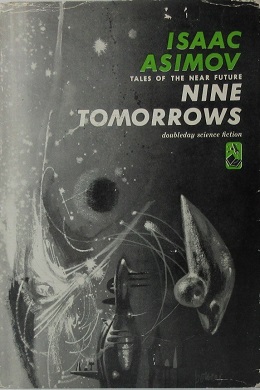
The Last Question by Isaac Asimov
Read this short story for free online here, or hear Isaac Asimov read it to you here on youtube.
1. This is a nine page series of seven flash fiction episodes that are repeated cyclical events. Each is different enough to stay interesting and the whole is short enough to not get repetitively boring. This formulaic, episodic repetition is well done and each episode gives merely a glimpse of the surrounding context. But each glimpse is a meaningful, important one, packed with ideas of future human evolution that allows the story to expand in the reader's imagination outside of the words on the page.
2. Like in "Nightfall", Asimov starts with the familiar, but then walks off through stages into theoretical post-matter humans and finally to the fantastic realization of a creative god. But this end is still tinged with familiarity from Biblical creation. This is a large chunk of time and evolutionary change to bite off in one short story, or seven flash-fictions, but Asimov pulls it off through this structure. It's courageous of Asimov to take a nine page short story and further fragment it into seven connected shorter stories over this much time and change. That he was successful clearly shows his immense skill as a storyteller. It's astoundingly well crafted throughout.
3. Because I think this is so well constructed, I'm going to list all seven episodes and the scene, plot, and revelation about future humanity. One: familiar humans are confined to their own solar system when two computer techs get drunk on a night-watch. Two: a human family emigrating to another star in the Milky Way arrives at their destination planet. Three: humans can now harness sun power and they have almost overpopulated the Milky Way, while two people try to assemble a political report to a committee. Four: humans are still tied down to matter via bodies in immortal stasis, but their consciousnesses roam the almost overpopulated universe free of their body, as two explorers seeking newness only for their own pleasure run into each other and converse philosophically. Five: Man is now a unified consciousness, floating outside of the bodies in stasis, still unable to solve the repeating ultimate question, and realizing it as an imminent whole for the first time. Six: Man's minds fuse with the computer, transfer their consciousnesses as the galaxies end, in stasis bodies die off of heat-death. Seven: the computer starts the process all over again after solving the question. The episodes are given variety through their uniqueness, but theme and connection through the repeated question and answer. This is great structure, both communicating the inevitability of that first drunken bet, and seeing it through to the end.
4. The writing is okay, again. Tight, explanatory narrative only—which he is skillful at here. The writing's directness helps the whole stay focused appropriately. I think that first line is good, especially in relation to the story to come. Overall there is nothing great, nothing terrible. But really, what is possible in flash-fiction other than efficiency and maybe one witty thought? Well here he has three witty thoughts spread across seven episodes, one of which is repeated in six episodes, and that's not bad. The characters, as in most flash fiction, are necessarily two dimensional to keep everything so tightly focused.
5. It might be a plot hole that humanity is a single mind in episode five, but then multiple again in six.
6. I think there are three themes: that humanity doesn't know the side effects of what it creates, that humanity never focuses its efforts on something until it's too late, and that history is cyclical. Here, the perpetually self-improving computer eventually allows people to focus solely on personal pleasure while the computer's improvement seems to pass out of the understanding of the humans in the story; then it unexpectedly restarts all of universal history, giving humans another cycle. Humanity meanwhile, for all its physical changes, doesn't really change that much mentally and is still eminently capable of ignoring the onrushing train. The third theme is created directly from the story structure, the repetition of the question and answer, and the computer's action and words at the end.
7. The lack of tangential discourse, the cyclical repetition, and the two dimensional characters allow the short story to stay incredibly focused and tight. But melded to that is information about human development that answers just enough questions to give the story import: some of the necessities for these large changes are briefly and logically explained as overpopulation. The more fantastic changes are simply explained as facts—and they're familiar to science fiction, so they're not too big of imagination stretchers. But by exploring them through these varied episodes—all short and direct enough to stay engaging—they are shot through with uniqueness enough to make the whole story memorable and believably familiar.
1. This is a nine page series of seven flash fiction episodes that are repeated cyclical events. Each is different enough to stay interesting and the whole is short enough to not get repetitively boring. This formulaic, episodic repetition is well done and each episode gives merely a glimpse of the surrounding context. But each glimpse is a meaningful, important one, packed with ideas of future human evolution that allows the story to expand in the reader's imagination outside of the words on the page.
2. Like in "Nightfall", Asimov starts with the familiar, but then walks off through stages into theoretical post-matter humans and finally to the fantastic realization of a creative god. But this end is still tinged with familiarity from Biblical creation. This is a large chunk of time and evolutionary change to bite off in one short story, or seven flash-fictions, but Asimov pulls it off through this structure. It's courageous of Asimov to take a nine page short story and further fragment it into seven connected shorter stories over this much time and change. That he was successful clearly shows his immense skill as a storyteller. It's astoundingly well crafted throughout.
3. Because I think this is so well constructed, I'm going to list all seven episodes and the scene, plot, and revelation about future humanity. One: familiar humans are confined to their own solar system when two computer techs get drunk on a night-watch. Two: a human family emigrating to another star in the Milky Way arrives at their destination planet. Three: humans can now harness sun power and they have almost overpopulated the Milky Way, while two people try to assemble a political report to a committee. Four: humans are still tied down to matter via bodies in immortal stasis, but their consciousnesses roam the almost overpopulated universe free of their body, as two explorers seeking newness only for their own pleasure run into each other and converse philosophically. Five: Man is now a unified consciousness, floating outside of the bodies in stasis, still unable to solve the repeating ultimate question, and realizing it as an imminent whole for the first time. Six: Man's minds fuse with the computer, transfer their consciousnesses as the galaxies end, in stasis bodies die off of heat-death. Seven: the computer starts the process all over again after solving the question. The episodes are given variety through their uniqueness, but theme and connection through the repeated question and answer. This is great structure, both communicating the inevitability of that first drunken bet, and seeing it through to the end.
4. The writing is okay, again. Tight, explanatory narrative only—which he is skillful at here. The writing's directness helps the whole stay focused appropriately. I think that first line is good, especially in relation to the story to come. Overall there is nothing great, nothing terrible. But really, what is possible in flash-fiction other than efficiency and maybe one witty thought? Well here he has three witty thoughts spread across seven episodes, one of which is repeated in six episodes, and that's not bad. The characters, as in most flash fiction, are necessarily two dimensional to keep everything so tightly focused.
5. It might be a plot hole that humanity is a single mind in episode five, but then multiple again in six.
6. I think there are three themes: that humanity doesn't know the side effects of what it creates, that humanity never focuses its efforts on something until it's too late, and that history is cyclical. Here, the perpetually self-improving computer eventually allows people to focus solely on personal pleasure while the computer's improvement seems to pass out of the understanding of the humans in the story; then it unexpectedly restarts all of universal history, giving humans another cycle. Humanity meanwhile, for all its physical changes, doesn't really change that much mentally and is still eminently capable of ignoring the onrushing train. The third theme is created directly from the story structure, the repetition of the question and answer, and the computer's action and words at the end.
7. The lack of tangential discourse, the cyclical repetition, and the two dimensional characters allow the short story to stay incredibly focused and tight. But melded to that is information about human development that answers just enough questions to give the story import: some of the necessities for these large changes are briefly and logically explained as overpopulation. The more fantastic changes are simply explained as facts—and they're familiar to science fiction, so they're not too big of imagination stretchers. But by exploring them through these varied episodes—all short and direct enough to stay engaging—they are shot through with uniqueness enough to make the whole story memorable and believably familiar.
Labels:
1956,
Isaac Asimov,
Science Fiction,
Short Story
25 August, 2015
Nightfall by Isaac Asimov
This story is available here via .pdf and here to read online.
1. The theme here comes directly from the plot: namely, a wonder at the stars that have and must change humanity. He is also postulating that stars are an important frontier for humans—they're literally hanging over our heads, a constant goal. This theme is shown through the plot much more than through the words of the characters: the newsman's reaction to closing the blinds, the cult acolyte's words, and Aton's closing monologue are the only three examples that I recall of the words supporting the theme. Even the omniscient narrator says nothing. The plot communicates the idea all but alone. But the sublimity of empty space and darkness and stars serves to humble at least one of the characters, which adds a wrinkle to this main theme.
2. I think there is a major plot hole: the planet has six suns and only one is eclipsed, therefore the other parts the planet would still be in light. Why would the entire culture fall if only one city is plunged into darkness?
3. The setup, pacing, and flow of information is perfect. Every explanation for every action is used by Asimov to establish another part of the world that he is building. For instance, of course their eyes cannot grow accustomed to darkness: they evolved on a planet of perpetual day time. This detail of the eyes builds logically from Asimov deeply examining the premise. Rather than an intro info dump, he begins with familiars—a skeptic newsman confronting a scientist on the verge of a great discovery—then reveals the context and builds the world with every action that proceeds through the novel. He approaches an interesting premise focused, starting with familiars, then building logically to a fantastic ending. It's consistent and the story is crafted extremely well. It's so simple and effective and interesting how every revelation is hung on a plot-hook or a conversation—but mostly on the plot actions. It's all tight and believable: the world the actions that conversations are tightly focused perfectly for a short story.
4. The writing is communicative but unexciting. Aton's fragmented ending monologue is probably the best writing of Asimov's I have yet come across, but nothing else excites or disappoints.
5. I still think the weakness of Asimov is his characters—they're not really complex enough and humanity is the focus, not humans. However, it is a short story, and this helps it stay focused. But since this is a little longer of a short story, perhaps more character depth could've been pulled off. Though he is using an ensemble cast so it probably wouldn't work.
1. The theme here comes directly from the plot: namely, a wonder at the stars that have and must change humanity. He is also postulating that stars are an important frontier for humans—they're literally hanging over our heads, a constant goal. This theme is shown through the plot much more than through the words of the characters: the newsman's reaction to closing the blinds, the cult acolyte's words, and Aton's closing monologue are the only three examples that I recall of the words supporting the theme. Even the omniscient narrator says nothing. The plot communicates the idea all but alone. But the sublimity of empty space and darkness and stars serves to humble at least one of the characters, which adds a wrinkle to this main theme.
2. I think there is a major plot hole: the planet has six suns and only one is eclipsed, therefore the other parts the planet would still be in light. Why would the entire culture fall if only one city is plunged into darkness?
3. The setup, pacing, and flow of information is perfect. Every explanation for every action is used by Asimov to establish another part of the world that he is building. For instance, of course their eyes cannot grow accustomed to darkness: they evolved on a planet of perpetual day time. This detail of the eyes builds logically from Asimov deeply examining the premise. Rather than an intro info dump, he begins with familiars—a skeptic newsman confronting a scientist on the verge of a great discovery—then reveals the context and builds the world with every action that proceeds through the novel. He approaches an interesting premise focused, starting with familiars, then building logically to a fantastic ending. It's consistent and the story is crafted extremely well. It's so simple and effective and interesting how every revelation is hung on a plot-hook or a conversation—but mostly on the plot actions. It's all tight and believable: the world the actions that conversations are tightly focused perfectly for a short story.
4. The writing is communicative but unexciting. Aton's fragmented ending monologue is probably the best writing of Asimov's I have yet come across, but nothing else excites or disappoints.
5. I still think the weakness of Asimov is his characters—they're not really complex enough and humanity is the focus, not humans. However, it is a short story, and this helps it stay focused. But since this is a little longer of a short story, perhaps more character depth could've been pulled off. Though he is using an ensemble cast so it probably wouldn't work.
Labels:
1941,
Isaac Asimov,
Science Fiction,
Short Story
14 August, 2015
The Martian Chronicles by Ray Bradbury
For Morgan
1. It's always difficult to discern tactics and writers' lessons from a series of short stories like this. I've read some of these before and had been curious if there were any others. The continuity of this fix-up novel is in the continuity of location: it's plot concerns human colonization, abandonment, and re-colonization of Mars. The theme of each story differs and only a broad theme can be sketched of human attitudes towards home, archaeological and natural resources, and the unfamiliar. Perhaps the theme is best distilled in the story "—And the Moon be Still as Bright", in which an introverted idealist decides to sabotage the fourth expedition in order to preserve Mars's natural and archaeological resources, all because of his dissatisfaction with what his companions reveal about aspects of earth culture, home. As each crew member reacts differently in the face of the unknown, this story best sums up what is my best guess at the overarching theme. The whole conglomeration of short stories works for me, and the frame of progressing time, specifically stated in the titles, helps keep it legible and moving. It's effective that the novel also reaches a sort of height in plot action when the world goes to war.
2. The shifting of perspective from earth to Mars and back a few times really shows context well. By referring back to earth's events through onscreen earth stories, the themes are shown affecting all humanity, not only the Martian pioneers. This is effective to help give context and relatable, relative import to the Mars based chronology.
3. A few characters are well developed: Ylla, Spender, Captain Wilder, Parkhill, the old man who converses with Thomas at the gas station, Father Peregrin, and the father in "The Million-Year Picnic." These are all well written because they exist in enough different situations that give them opportunities to show their complexity. Being a series of short stories, many characters are not allowed enough time to breathe and define themselves as the point and scope of some stories does not require more than a two dimensional representation of characters. However, even in that two-dimensional aspect, Bradbury is trying to draw out something about us as humans that relates today.
4. The book comes off like a writer's playground: Bradbury keeps returning to the settings and themes as if worrying at a piece of popcorn stuck between his teeth. It's as if the setting is familiar enough to Bradbury to allow these very different stories to exist together, to allow him to experiment with a new idea, a new character, or a new situation in this safe zone where the conglomeration of all the stories is better than them alone and separate. This is because together each idea discussed adds another dimension to the themes, another layer of importance, and a fresh point of reference in the chronology. Therefore, these stories seem like a deck of cards where a new one can be shuffled in to support the whole, though it maybe be very different. [This appears to be how his publishers have treated these stories as well with seemingly every publishing of this fix-up containing a unique set of stories. I sort of wish all his Martian stories were collected in all the versions.]
5. The writing is efficient and communicative, but I don't think it ever obtains greatness. The plodding of some of the stories is solid, allowing the theme a slow reveal of importance that kept me thinking after I was finished reading. But the writing did not. I don't remember a phrase or description of particular beauty, but the ideas came across loud and clear. Wait, that's not quite true, as I just now remember that passage describing the silhouettes in paint of a family caught in an atomic blast in California, and that's a beautifully poignant passage that is well written. But it's the only one that I can remember.
6. Where Foundation fails for lack of driving theme, this succeeds by having one. But it plays with that theme, examining it from this way and that like a three dimensional kaleidoscope. Bradbury doesn't overdo it though—some characters are allowed actions outside of that theme that provide a mental break for the reader, which helps make the themes more palatable, but also adds some context. And some stories support the chronology more than they support the theme. This is a strong tactic, allowing these situations together to have more believability through variety than they do separate from each other.
1. It's always difficult to discern tactics and writers' lessons from a series of short stories like this. I've read some of these before and had been curious if there were any others. The continuity of this fix-up novel is in the continuity of location: it's plot concerns human colonization, abandonment, and re-colonization of Mars. The theme of each story differs and only a broad theme can be sketched of human attitudes towards home, archaeological and natural resources, and the unfamiliar. Perhaps the theme is best distilled in the story "—And the Moon be Still as Bright", in which an introverted idealist decides to sabotage the fourth expedition in order to preserve Mars's natural and archaeological resources, all because of his dissatisfaction with what his companions reveal about aspects of earth culture, home. As each crew member reacts differently in the face of the unknown, this story best sums up what is my best guess at the overarching theme. The whole conglomeration of short stories works for me, and the frame of progressing time, specifically stated in the titles, helps keep it legible and moving. It's effective that the novel also reaches a sort of height in plot action when the world goes to war.
2. The shifting of perspective from earth to Mars and back a few times really shows context well. By referring back to earth's events through onscreen earth stories, the themes are shown affecting all humanity, not only the Martian pioneers. This is effective to help give context and relatable, relative import to the Mars based chronology.
3. A few characters are well developed: Ylla, Spender, Captain Wilder, Parkhill, the old man who converses with Thomas at the gas station, Father Peregrin, and the father in "The Million-Year Picnic." These are all well written because they exist in enough different situations that give them opportunities to show their complexity. Being a series of short stories, many characters are not allowed enough time to breathe and define themselves as the point and scope of some stories does not require more than a two dimensional representation of characters. However, even in that two-dimensional aspect, Bradbury is trying to draw out something about us as humans that relates today.
4. The book comes off like a writer's playground: Bradbury keeps returning to the settings and themes as if worrying at a piece of popcorn stuck between his teeth. It's as if the setting is familiar enough to Bradbury to allow these very different stories to exist together, to allow him to experiment with a new idea, a new character, or a new situation in this safe zone where the conglomeration of all the stories is better than them alone and separate. This is because together each idea discussed adds another dimension to the themes, another layer of importance, and a fresh point of reference in the chronology. Therefore, these stories seem like a deck of cards where a new one can be shuffled in to support the whole, though it maybe be very different. [This appears to be how his publishers have treated these stories as well with seemingly every publishing of this fix-up containing a unique set of stories. I sort of wish all his Martian stories were collected in all the versions.]
5. The writing is efficient and communicative, but I don't think it ever obtains greatness. The plodding of some of the stories is solid, allowing the theme a slow reveal of importance that kept me thinking after I was finished reading. But the writing did not. I don't remember a phrase or description of particular beauty, but the ideas came across loud and clear. Wait, that's not quite true, as I just now remember that passage describing the silhouettes in paint of a family caught in an atomic blast in California, and that's a beautifully poignant passage that is well written. But it's the only one that I can remember.
"Ten-fifteen. The garden sprinklers whirled up in golden founts, filling the soft morning air with scatterings of brightness. The water pelted windowpanes, running down the charred west side where the house had been burned evenly free of its white paint. The entire west face of the house was black, save for five places. Here the silhouette in paint of a man mowing a lawn. Here, as in a photograph, a woman bent to pick flowers. Still farther over, their images burned on wood in one titanic instant, a small boy, hands flung into the air; higher up, the image of a thrown ball, and opposite him a girl, hands raised to catch a ball which never came down. The five spots of paint—the man, the woman, the children, the ball—remained. The rest was a thin charcoaled layer. The gentle sprinkler rain filled the garden with falling light."
6. Where Foundation fails for lack of driving theme, this succeeds by having one. But it plays with that theme, examining it from this way and that like a three dimensional kaleidoscope. Bradbury doesn't overdo it though—some characters are allowed actions outside of that theme that provide a mental break for the reader, which helps make the themes more palatable, but also adds some context. And some stories support the chronology more than they support the theme. This is a strong tactic, allowing these situations together to have more believability through variety than they do separate from each other.
Labels:
1950,
Ray Bradbury,
Science Fiction,
Short Story
02 August, 2015
Foundation by Isaac Asimov
1. What a slow and uninteresting opening! This is exactly what I try to avoid in my writing—these couple of tedious chapters of pure world building. The intro info dump is awkward and slow and if I wasn't listening to it, I probably would've stopped reading it, I was that bored. The details of the world building are not even that different or interesting enough to allow this. I think the Game of Thrones does this much, much better, as did Dune. And if I start off not caring about the story or characters, what's going to get me interested in the middle of the novel?
2. The world building simply extremes everything—small things to us are now tiny in the future, big things are gigantic, empires last tens of thousands of years, space and science are god and the higher ups know religion is a fake-a power grab. The ideas just generally are not that interesting to me.
3. But the stories are! It's a classic case of misdirection, not giving the reader enough information to solve the mystery, and then revealing all the important stuff in the last chapter of the section. It's like a comic book's last page reveal. But I do not much mind it here. Somehow it works. Maybe it's that each episode is short enough to support this trick. I think this is pulp fiction, not literature. That's not a judgment. The stories–except for the first one–are good! They are interesting and revealing about the characters and the world. The pacifism in the midst of revolution and civil war is an interesting theme and I believe Asimov pulls this theme off. These are four good stories with a bad one at the beginning.
4. The pacing of the book is weird. It is a series of five short stories, or novellas, which are all paced fine within themselves. But, as an episodic novel, as a whole book, it doesn't quite work. Most episodic novels—The Canterbury Tales, Hyperion, etc.–have a framing structure to provide continuity and legibility. Asimov forgoes the frame narrative here, which is an idea that I love. But this novel does not pull it off. It comes off like a comic book, rather than a novel. And this awkwardness did not work for me as a reader. I am not saying that this type of structure needs a frame narrative, but here it would have helped because of the last page reveals: these are so key to understanding what was happening in each episode, that any overarching theme is buried immediately under the new episode's opening. The breaks between episodes were overly jarring and lost me as a reader.
5. The misdirection annoys me–the deus ex machina endings to every episode are patronizing and insult the reader's intelligence. It is like each episode is a mystery and Asimov does not give the reader enough information to solve it until all is revealed to the antagonists at the end–and it is revealed in such a patronizing and insulting manner by the protagonist to the antagonist, that I end up feeling insulted and patronized as a reader, because this is the first time I'm hearing it as well.
6. Due to this being an episodic novel in which each episode is fully revealed at the end, I feel like the characters are not really understood or known until the end either. So, every time I get interested in a character or start to understand one, they're moved off screen so that the new episode can start. This is not great. His character introductions are lacking.
7. The overarching theme may be common sense activity vs. passivity. And this is played in an interesting way. Mob mentality emotionalism is the bad guy here, and probably the main character of the book if it has one. War mongering, vengeance, relying upon accepted beliefs–these are all portrayed as incompetent. They start often innocently enough, these ideas, but then become intolerant to reason while the protagonists remain fairly uniform, confident, reasonable, and correct.
8. The writing communicates, but it never excites me. I remember no line from the book, good or bad.
9. I ended up enjoying the book much more than episode one implied that I would. It gets more interesting—what Asimov does with the uninteresting world building is somewhat interesting. The four later episodes are exciting and paced well. But I still just have not really enjoyed any book that I've read by Asimov. I will keep reading his works now and then in the hopes that one of them strikes me in the future and I can figure out why he's so popular. Even friends of mine who love Asimov's work can't really put their finger on why.
[It turns out, after looking this book up online, that it is a collection of five short stories written in the early 1940s. This is a fix-up novel.]
Labels:
1942,
1943,
1944,
1951,
Foundation Series,
Isaac Asimov,
Science Fiction,
Short Story
Subscribe to:
Posts (Atom)


_Virus_PHIL_1878_lores.jpg)