05 August, 2015

Starship Troopers by Robert Heinlein

For Morgan


1. The strongest thing about the writing at the start, just after that first bug-raid, is that instead of setting up a liberal-conservative dichotomy, Heinlein sets up debates within viewpoints. Two conservative viewpoints struggle for prominence—the father and the teacher. This feels more unique and honest to how I thought about politics in high school. It also sets up the way Heinlein is going to deal with Juan: he will seem to be all soldier, but he's actually going to be subtle and unique within that category.

2. Another strength of the writing is that it changes throughout. When Juan gets to OCS, we see him becoming more intelligent—we see this through word choice, sentence structure, and the way he argues, namely: the words are more unusual, the sentences more complex, and the arguments more detailed than the preceding chapters. Throughout, Juan is humorous, enthusiastic, and capable of an emotional poignancy that the reader feels. One example of his humor, "I couldn't say about that, I've never been a racehorse."


3. Juan consistently breaks the fourth wall, talking to the reader. I find this effective here. But why? Perhaps it invites the reader to pause and consider. Perhaps it increases immersion for the reader. But this direct addressing of the reader is effective for me here as it makes it hard for my mind to wander when Juan is talking directly to me. I think it would be boring over a whole book, but it works here because it does not happen all the time, and the book isn't too long. The teachers of HMP talking directly to Juan are also an effective way to talk to the reader without formally breaking the fourth wall.

4. Like other war memoirists, Juan is trying to... not quite justify himself, but certainly explain himself and perhaps convince the reader as well. Heinlein must've done his homework before starting this fictional war memoir, because it feels very honest to war memoirs that I have read. This realism helps make Juan more human—it comes from believing that humans always make the decisions they think will benefit them the most in the context of their personal experiences, their learned experiences from others, and the specific situation. Where he fails war memoirists is that he does not have the same relish for describing tactics. He tries to get away with this by saying they changed tactics each drop so the bugs wouldn't get wise; but with how many MI platoons would be involved in a war of this scale, I don't quite buy that. This is even more perplexing when I realize how liberal he is with throwing around ranks and group sizes like "rump battalion", with no explanation for the reader, expecting that they know this information. Perhaps he doesn't consider this important or interesting to the wider audience that he was writing to.


5. The best writing in the book is that Juan's changing reasons for joining and staying are illuminated without Juan changing who he is significantly, but through him becoming more self-aware. War and the right to vote are certainly motivators, but it is difficult to tell how important they are to Juan himself. He seems to try and talk himself out of those as reasons, but the amount of time spent on them in the novel seems to imply their importance. It may be a realization that he would wonder his whole life whether he was his own person—which is a fascinating either/or/if choice: either he joins or he doesn't, but if he dies he could never know anything. This is an effective problem to put a character into as a writer, and it helps illuminate Juan's character. But the time when he decides to quit boot camp until the end of that lengthy chapter is brilliant and evocative. The coup de grace is near the end where he starts noticing other people again—the band marching specifically. Essentially he becomes self-absorbed on orderly duty—despite the court marshal and Zim getting chewed out. But after the letter, on the march back, he stops living for himself and begins living for his squad mates. And the writing reflects that: it goes from introspective examinations of Juan's emotions to Juan looking around himself and realizing that he is not in a vacuum, and the writing describes the band and the march back. This scene really got me interested in boot camp stories—of which the two chapters in Lone Survivor do a very good job of evoking the experience, though the writing may be a bit thick on bravado. Anyways, this part is where he finally grasps why he fights—though it isn't mentioned here: he fights for the guy in the fox hole next to him, and so others do not have to. Why Juan fights and gets a commission shifts throughout the novel as he becomes more self aware. Initially it seems that he is joining up because of a shifting pattern of nebulous reasons: Carmen, Carl, franchise, teen angst, individuality, curiosity, boredom, pride, citizenship, et cetera. Then he realizes that he does it for other MIs. Yes, there is a small streak of pride and eagerness to try new things, but mostly he does it for the other soldier next to him. He continues with his training at OCS because of the challenge of it, for fear of not measuring up to it.

6. The other spectacular writing is in Juan's respect and empathy for the bugs. Killing them is his job, but he regrets the torture of captured bugs. He is not a genocidal racist. He actually learns from and respects the bugs. The three main conclusions of the bugs that Juan appreciates are their organization, their quick gestation, and the value they placed on a single life as below that of the good of the whole. The first two points are merely about efficiency and effectiveness in combat and war—it is understandable that a soldier like Juan would look at these with admiration. The third point is where Juan connects with the bugs the most—after all, he himself has become a soldier and placed the value of his own life below that of the good of the whole. In this may be Heinlein's greatest writing in the book: Juan, for all of his bravado, for all of that talk of his friends, empathizes with the bugs. He respects them on the battlefield, of course, but he also respects their society to an extent. He seems to regret the torture that the humans subject the bugs to when they capture a live specimen. Yes, he appreciates the safety and more effective weapons that study of bugs affords him and his squad, and I do not think that he would trade anything for that. But he still regrets the necessity of the torture. I'm reminded of once talking to my uncle—my great uncle actually, but nobody ever calls him that. He was in the Merchant Marines during the second world war. I was a kid in high school interested in nuclear physics, and I was dumb enough to ask him about the bombs. He told me and I will never forget what he said. But the point that applies to Juan's case is that Uncle Bob felt the same about the bomb that Juan feels about torturing the bugs for information. He was happy that the destruction of two Japanese cities saved the lives of so many Americans, so many of his friends. And yet he was in tears over the pain and damage caused to the people of those two cities. It was initially something that they rejoiced about and celebrated on board the ship because that final invasion tension had been released. But as he learned more about the effects, he also mourned.


7. However, I believe this book to be one of Heinlein's less skillfully written novels. I have a slight problem of the pacing, bookending a war memoir with action on both sides does not quite support the extensive introspection of the middle. This is something that Heinlein may have been able to fix with more actions from training camp and OCS to help pace Juan's introspection better. Also, it feels like he started writing this novel and then changed his mind about a few things without taking them out. For instance, page 33 gives some hints as to where the novel is going, but two things on this page are entirely dropped: the "neodog symbiote", and the SPCA (?) trouble at the neodog exhibit. My question is: why even hint at this event and then drop it? I can understand if your hints give some context of the world that Juan exists in, but these hints are so specific within the fiction that they're defective for setting the mood of Juan's context. It is baffling. And I've come to the conclusion that I think Heinlein intended to write a much longer novel, but when he decided to write this story closer to a novella, he forgot to take out some of the threads that he started in the early chapters. These abandoned threads were glaring to me. Part of the strength of most novellas and shorter novels is their tight focus.

8. The strongest part of this novel, and probably the reason why Heinlein received more letters about this book than any other, is the incredible amount of ideas that Juan expounds. This novel is not so much a story being told as a number of ideas being listed. It's unusual in that. I typically do not discuss the ideas within a book here in this space because these notes are intended to be useful for my writing and my memory. However, the whole point of this novel is Juan, and he is explained to the readers through maybe five to ten actions, and an overwhelming amount of interlinking ideas. To illustrate his point, I have listed all of the ideas that I could find within this book. A couple of the ideas are spoken by HMP professors, but even these ideas are merely there to explain Juan. I marvel at how related and interlocking each idea is with the rest of them. I want to stress here that I do not agree with all of these ideas, I just want to leave a record for myself of how many ideas it took Heinlein to create such a well rounded, believable character in Juan. Though I explicitly note why I disagree with a couple of the arguments, that does not imply that I agree with the others. Except for 1, 2, and 24, these ideas are listed in chronological order of where they are found within the book.


1. A whole class of ideas are witty one liners about the beliefs of soldiers:
—Sergeants are bad
—Soldiers find things not practical to be silly
—Soldiers want to die in bed
—Soldiers have mostly been the same through history
—Do something constructive at once, don't think too much because that wastes time
—Keep moving
—Gender roles are important for organizational benefits
—Show deference to women
—Cleanliness is key
—There are only two sizes in the army: too small or too large
—Do not ask a silly questions of your superiors
—Personal space is important
—Personal time is important
—Civilian life is complicated and untidy
—Practice makes actions unconscious
—Don't pass up the line what you can decide
—Civilians know more about the war's overall progress than a soldier
—Civilians do not speak the same language
—Stupid races do not build spaceships

2. A smaller class of ideas are witty one liners about the beliefs of civilians:
—Military service is silly
—Always take the easiest route


3. A lot of the ideas in the book center around violence. I have a friend who believes that violence is the most basic human language, so I was very interested in these ideas.
—First off is the idea that violence settles things: it has settled more issues in history than anything else, like Carthage. The HMP Professor goes on to state that the opposite view is thoroughly immoral and inexcusably silly.
—Second is the idea that violence is a tool, not a negative. It is a way to train people like when we use restrained violence when training dogs or spanking toddlers. Another way to put this is that you can save a lot of violence by getting one good punch in to make your opponent question whether he really wants to fight you are not. This is violence trying to prevent further violence. This is violence training another person. It's also that violence is just a symptom.
—Thirdly, war supports the government's decisions by force, by violence.
—Fourth, it is a form of communication: it can be about setting hierarchy or gaining respect; it can be a friendly bonding experience like that one between Zim, Frankel, and Shujumi; or it can express faith in a person after a mistake. Flogging is a compliment because it says we think you are capable and worthy of being corrected or fixed. (87)
—Fifth is the extensive portion on the violence inherent in Public Parks at night. This begins on page 90 and there are some smaller ideas about violence contained in the next five pages, but the real conclusion on page 95 is that violence is useful because it comes from our innate survival instincts: it loads the pain side of the pain-pleasure equation.


4. There are moral differences between a veteran and a civilian: a soldier has proven that he's willing to lay down his life for the good of the whole, while civilians have not inherently proven that of themselves.

5. Boot camp and OCS are as hard as possible because what comes next is harder—military service. They are finely tuned tools to create with the army needs with what it has. (45) Any other way or any less hard would not be safe to those around the soldier, or to himself.

6. Cave men are no dumber than us, they just had less tools. (49)

7. There are no dangerous weapons, just dangerous people. The idea here being that the technology itself is not inherently dangerous, but the way that people use that technology is dangerous. For example, a car used safely is safe; while a car used to run pedestrians over is a dangerous weapon. But the car did not choose to be a dangerous weapon, the driver chose to use it as a dangerous weapon.


8. Value is relative, not absolute.
—Marx does not work because people are different: an apple is inherently more valuable to a baker wanting to make an apple strudel to sell than to a farmer needing something to feed to his pigs. This is because of personal and contextual differences. What matters is what the baker can do with the apple, and what he is willing to do or give to get the apple.
—"Nothing of value is free," because we are most satisfied with what we have earned, therefore we value it more. Misplaced value drags countries, societies, and cultures down. By this he means makes them less powerful in the eyes of others because they value things differently. For instance, Russia did not value their land as much as Napoleon valued conquering it, so they were able to trade land for life and kept the French out. What does a Russian care for Napoleon? They do not value the same things.

9. Technology, like the armored suit, should be designed to work with humans instead of requiring a retraining of the mind and reflexes. (84) [For more on this conclusion, see Donald Norman's The Design of Everyday Things, from 1988.]

10. Symbolism is important throughout the book, but especially in the story of Dillinger. Symbolically, Dillinger is still a soldier. Not in truth, but in fact. Not to them, but to others. It is about taking responsibility after the fact for something that they did not do, could not have stopped, but will take responsibility for in order to serve the greater good of the people. It is a bummer for the group, and they do penance to clean their reputation and remind themselves of their duty to the larger whole. It also teaches Juan that there is bad luck out of his control, maybe even that accidents exist. Though I think he concludes that these are unanswerable questions, at least at this point in his education and life.

11. Moral instinct does not exist: we are trained into it. The basis of morality is duty. Duty is to a group what self interest is to an individual. Duty is purely an adult virtue.


12. The right to life is a fallacy when drowning in the Pacific. [Here he confuses right to life and right to continued life.]

13. The right to liberty costs blood—even in the bloodless revolution of a democracy.

14. The pursuit of happiness is a state of mind, not a right.

15. When dealing with the loss of someone close to a group, as much as possible, keep everything else as close to what it was like before they died.


16. Sanctuary as a planet: radiation is necessary for evolution. [The metaphor being that hardship is necessary for betterment. This is clever because Sanctuary is the opposite of hardship—by being without hardship for the first time since boot camp, Juan is finally able to catch his breath and reflect on hardship.]

17. Why Juan fights: mostly he does it for the other soldier next to him. He continues with his training at OCS because of the challenge of it, for fear of not measuring up to it. For his father, it is an act of faith and self exploration, a rite of passage and a break from the norm.

18. Citizenship is a selfless, long-term state of mind. It is humble and proud, and willing to sacrifice for the greater good. (129)

19. Citizenship and state power: basing citizenship on military service because those citizens have already proven themselves willing to sacrifice for the greater good. Veterans are no more able to put down rebellions than civilians—perhaps they are less able due to potential disabilities from war wounds. [But this idea seems to ignore those gadflies like Socrates—selflessly sacrificed for the greater good, but through different means than military service.] Absolute authority in right to vote wedded to the ultimate social responsibility: wagering one's own life for the right to vote and watch over the greater good of the public. It also takes aggressive people and gives them the power they want, but first a term to work out their aggression in the military. It also gives power to those who have had bad days, those who are less likely to balk under pressure, and who have memories of fallen comrades to remind them of their purpose in serving the greater good.

20. Morals are self preservation above the individual level. Like duty is self interest at the group level, morals are self preservation at the group level.

21. One prisoner is worth risking everything to save. Because if we do not save that one prisoner, what are we trying to preserve? Humans always want their prisoners back. They always attempt rescue, and typically more rescuers die.


22. War is inevitable: a population will be hunted to extinction if it does not expand. When it expands, it forces population pressures that lead to war.

23. Pare the army down to mostly fighting men and hire out all the other jobs to the navy or civilians. This will lead to more camaraderie which helps the army look after and take care of its own, as well as keep itself in line. It will also be much more efficient.

24. The three main conclusions of the bugs that Juan appreciates are their organization, their gestation, and the value they placed on a single life as below that of the good of the whole. [This implies that we should learn from our enemies, not only to beat them in combat, but also to better ourselves and understand our own context better.]

In closing, the wikiquote article on this novel is a good reference. Numerous quotes mostly organized per chapter.

04 August, 2015

Childhood's End by Arthur Clarke


1. I do not think the Clarke is bad at creating characters, as opposed to Heinlein; just that Clarke's characters only serve the story, so they are abandoned after their usefulness. Like here, the head of the U.N. is a very good character—an honest portrayal of the aging statesman on the brink of retirement. And he fades out once the story moves into the future 50 years. The story is not about him. Or really any other character. Clarke's stories are typically about something other than a character or situation. Here it is about mankind's curiosity and capacity to change. Though the Supervisor lasts the whole novel, it is not focused on him and therefore is not really about him. Clarke writes like a good historian and anthropologist—think Thor Heyerdahl's Kon-Tiki or Giles Milton's Samurai William—rather than a more traditional storyteller. The characters serve the story, not the other way around as it often seems like Heinlein does.

2. Let me modify one thing: I think the theme of the story is creativity—which is the combination of curiosity and capacity to adapt, in a sense. At the end, when mankind is adapted to something beyond recognition and our ability to fully fathom, they return to creativity and their interest in pushing past their comfort zones in an attempt to find their place, to come of age, to end their childhood. Further, each section of the novel can be said to have creativity as a central theme: Stormgren is creative when he catches a glimpse of Karellen, an action which is the culmination of that section; Jan's creativity leads him to not only discover the Overlord homeworld, but to figure out a way to get there and achieve his goals; New Athens is all about creativity, a sort of artist's colony attempting to create creativity in the absence of struggle and strife; and at the end, the Overlords study the children in an effort to recreate their actions. The novel is centered on creativity. It examines what typically leads both towards and away from creativity. It places creativity as a basic human characteristic, maybe even a need.


3. The basic philosophical conclusion is that mankind's end must echo man's end: the life of one man who dies of old age is book ended by feebleness and rapid change—we both start out and end up crawling and unable to support ourselves by ourselves. Here Clarke theorizes that mankind's evolutionary path must be the same—we begin relying upon the earth, our mother, for everything, which mostly includes our material wants; and we end up relying upon our father, a "great consciousness", and his winged minions to guide us towards acceptance of our material mortality. This is an interesting idea for mental gymnastics that Clarke further expands in his later book 2001: A Space Odyssey. However, in 2001, the second frailty applies to only one man and it is more of a second birth than a final death. Here it applies to all mankind, and because the perspective is on Jan and the Overlords at the end, there's more emphasis on the final death of the material form, not what the humans become.

4. The paranormal activities within the book are interesting and help lend a mystery deeper than the plot's mystery of the Overlords. It is an element of few novels, yet Clarke makes it interesting, engaging, and keeps it from being sensational. It seems courageous to take on something as a key minor theme that every reader will have an opinion on. I thought it was done well.


5. The human race is lulled into lethargy by a Golden Age that destroys their quality creative outputs. This is a difficult assumption to follow. When faced with the sheer mystery of the Overlords, I have a hard time believing that every human would fold up their hand and step back from the table of progress and creativity. I don't buy it. Clarke's deus ex machina explaining away is simply that a culture's change in 50 years can be great—inconceivable even. This is shallow. It's only inconceivable because Clarke did not show it to the readers.

6. This episodic novel lacks a frame narrative, but does not need one. It still works because it is tied tightly together with the overarching theme of creativity, which acts in place of a frame narrative. The religions of the world all fall once the creativity of interpreting historical mysteries and context evaporates. Once the mystery of "can we travel in space?" is revealed—yes, we can—the creative search for how ceases. Once the necessity of creative living through strife and struggle is removed, artistic output ceases to be relevant or quality. As I noted above, this is a hard pill to swallow, but it is the theme that holds the episodes together and gives the whole novel legibility.


7. Some of the episodes shift scope: Clarke uses a macro angle on the Ouija game and the Greggson's life in New Athens, but often shifts to a wide angle perspective of humanity as a whole. The novel switches from details to broad brush strokes and then back again. This also is similar to 2001. And it works for me because both the detailed examinations and broad overviews are centered upon that central theme. I find this tactic interesting, but at times difficult. I think he almost always pulls it off here without jarring the reader too badly—after all, a new chapter is not just following the last chapter; or, chapter breaks signal those scope changes adequately—but it is not something I feel like I want to try in my own writing just now, because of the danger of losing the reader and my preference for exploring characters. It is like he keeps changing the context and the characters, just like a historian who examines a character central to the historical thread he is following, then the context surrounding that character, then that character again, then the context again, etc. This specifically reminds me of both Nathaniel's Nutmeg and Samurai William by Giles Milton.

8. I do not want to seem to say that this book is bad, because it isn't: I enjoyed it immensely. But I enjoyed 2001 more, and that treads a lot of similar ground: what makes us human, human evolution, a great consciousness meeting humanity, and the creative and curious drive to explore, know, and progress. This novel does step out on its own in alien invasion, religion, and social engineering; where 2001 expands into AI, space travel, and prehistory. I enjoyed both novels, but experienced some fatigue reading them back to back due to their similarities. And I enjoyed 2001 more.

03 August, 2015

2001: A Space Odyssey by Arthur Clarke


1. One thing that I really enjoy about Clarke, both here and in Rendezvous with Rama, is his ability to give information in a way that laymen can understand and enjoy. This might be my bias of loving layman's physics, but here it interests me. This could be some pretty dry stuff—explaining slingshoting spaceships—but it works here. He finds that line between too much information boring the reader, and just enough information told in an interesting way to make learning enjoyable.

2. While he does this with physics, the detailed description of life aboard the spaceship is a bit boring. It is an incredible feat of imagination—even for Clarke, who is known as a fantastic predictor of the future—but it seems to drag on, much like the days must drag on for the two astronauts who are awake.

3. HAL is a great character. He ends up being so human in his panic, his difficulty to maintain a lie, and his return to childlike behavior—all while still being unavoidably computer. He believes that all people must be like him because he is the only existence he knows. This is a powerful character, and an effective emotional tragedy.


4. HAL's fault—the conflict of lying about the mission to the astronauts, then concluding that these instructions to lie must indicate that the astronauts are nonessential—is a beautiful moral metaphor, and convincing examination of future technology. Like much science fiction, Clarke examines a current thread in culture—AI and space travel here—and pushes it to a logical extreme to show both potential benefits and pitfalls. The basic premise that shakes out is the truism that humans know not what they do. By not knowing how HAL will develop, they know not what their creation will do. Here Clarke could have gone the pulp route and made HAL a secret villain delighting in punishing and testing the meatbags. But instead I empathize with HAL. He is a well developed character. His flaws are part willful and part ignorance and part situational, much like mine tend to be once I fully glimpse them.

5. The scope of this book is fearless: tackling a timeline from pre-human to post-human. I think Clarke pulls it off, which is amazing. He is a confident, talented author biting off a huge chunk of material, and getting it to do exactly what he wants. And he does it well. This is an episodic novel without a frame narrative, but this structure actually works here because the thread is so important to each episode. Human evolution and change is that thread, and it is central to every part of the book. Even the opening pre-human part is the same narrative as the other parts. The echoes come back in situations so different from the original that they offer new insights and the theme rolls along, keeping it all together. This tactic of a central theme tying all of the episodes together would have helped Foundation, where the central eponymous element changed so drastically between episodes that the novel felt disjointed.


6. As to that first part, the pre-humans are described with an empathy that is touching. What we take for granted today, their great leaps of logic, are almost as astounding in the showing as they could be. I think merely telling about them would have lacked power, but there's just enough telling to ensure and confirm that the reader is on the same page with the author and characters.

7. Clarke's world building here is amazing. But most of his characters are merely good. In this way he's almost the opposite of Heinlein: whose characters are great, but whose world building is not as perfect as they are. I am not saying that Clarke's characters are bad, they're just not as perfected as his world building.

8. At the end, I want more. Star Child blowing up the satellite is such an enigmatic and powerful act that I'm looking forward to seeing how this post human goes, and what it does. The contrast between it and humanity is so great that I'm interested to see if it becomes a god, and what humanity does next. The temptation is obviously there narratively for Star Child to assume divinity. But if there's one thing that I know about Clarke, it is that he foils whatever I predict he's going to do, then shows why what he came up with is more logical and correct.


9. Clarke's writing is not amazing, but it is good. His teaching moments are very good—and I think it is a special, valuable talent to be good at making orbital mechanics interesting. But he does have moments of brilliance here, the high point being: "Sorry to interrupt the festivities, Dave, but I think we have a problem." This is just one example, but it is so great! Overall, this is above average writing with moments of brilliance.

10. Another place where Clarke bites off more than the average author can chew is in the nearness of his future—this is not thousands of years hence; it is something he will probably see in his own lifetime. [He did live through 2001 and the intro to the audiobook that I listened to was really enjoyable, reflecting on what he got right and wrong, the way the book was written, and its influence.] It is courageous to try this. And although there are some clear differences between his work and how the future actually shook out—we have no AI, the human body requires a lot more exercise in space than he anticipated, we have yet to attempt artificial gravity in space, we have sent no manned missions farther than the Moon, etc.—he pulls the whole off well enough that it does not feel dated to me. Reading space travel stories by HG Wells or Jules Verne is difficult today, because all of the disbelief that must be suspended to buy into the narrative. Not so here. This is easy. 2001 has become alternate history since it was published, but it still works well.

The Moon is a Harsh Mistress by Robert Heinlein


1. Heinlein writes great characters—they feel like well rounded people instead of archetypes to progress the story. Mannie, Mike, Prof, the Frenchman, Mami—these are interesting characters that I want to follow. He draws a line between consistency and predictability, between realistic and commonplace, and by hitting this balance he avoids inevitability and mundanity. Even the more minor characters—Wyoming, Greg, Dr. Chan, Slim and the like—are interesting characters in their own right and I want to know more about them too. I feel like his characters are so successful here because Heineman uses the same people in different situations: he adds more stress, changes the prominence of different influencing characters, puts the character in new situations, and changes the character's goals. This variety allows Mannie to show the different sides of his personality to the reader. And this tactic keeps the plot moving.

2. I like Mike. Compared to other AI's in fiction, this is just as likely a result of self-awareness as the tragedy of HAL9000, the excess of GLaDOS, or the brutal but subtle judgment of Shodan. Mike's childlike wonder, philosophical search for questions, and taking for granted of his own self-awareness and talents creates an interesting base to draw a good character from, and a good starting point for both his character arc and his subservience to the humans—he wants to help them because they are his mystery and their goals are his game, his raison d'être. His sleep at the end is the real cost of the revolution to Mannie, and hence, to the novel.


3. Heinlein lets Mannie run away with the story. The dialect is a real risk to the novel, but it ends up working for me because Heinlein is consistent and Mannie is cynically funny. One of the reasons it is so hard to nail Heinlein down to any overarching philosophy or writing goal is because his characters so dominate his novels that they become his writers. It's more like Mannie wrote this book than Heinlein, and that shows a staggering aspect of Heinlein's skill. In this way, I believe that Heinlein writes like a method actor. [Heinlein's stories seem to mostly be about characters, and they take over his novels. He gives them free range over the whole shebang, and sometimes they're great storytellers, sometimes they're not, but it's about them.]

4. It is difficult to not be excited by this book. First, Heinlein is clearly so excited about his subjects and characters that it comes across in his writing and affects the reader. Second, the plot is interesting and reinterprets historical and fictional events in a fascinating, believable way. Third, the plot moves along at a good pace, ignoring or merely recapping gaps in the narrative that may have been drudgery—much as Mannie would have himself. Fourth, the world he builds is both familiar and fantastic in an intriguing way that is both consistent and important to the plot—like a Pixar movie, it requires only a couple of suspensions of disbelief, then logically examines the results of those suspensions deeply. Lastly, the writing itself, not groundbreaking or uniformly poetic, has some real high points in Mannie's wit and wryly humorous observations. These five points make the novel an exciting read.


5. I do not feel done praising the pacing. Not only does it move from each new important situation to the next with just enough pause for reflection, which allows the characters to change in believable ways, but it also covers an interesting time period. That post-revolution politicking is not often covered in novels, and it is the main part of the book here. Heinlein makes it interesting. The revolution almost goes without saying, but securing it proves much more subtle and difficult.

6. There's a good mix of characters. Mannie is only satisfied by action. Wyoming is a professional agitator who knows little about the fulfillment of that agitation. Prof is the lifelong revolutionary politician who understands the subtleties of timing. Mike finds the revolution fun and knows how to crunch numbers to intuitively look at tough situations as free from bias as possible. The ways these four work together, compensating each others' weaknesses and supporting each others' strengths, may be the true soul of the novel. I believe that these interpersonal relationships are the theme and driving force of this book.

02 August, 2015

Foundation by Isaac Asimov


1. What a slow and uninteresting opening! This is exactly what I try to avoid in my writing—these couple of tedious chapters of pure world building. The intro info dump is awkward and slow and if I wasn't listening to it, I probably would've stopped reading it, I was that bored. The details of the world building are not even that different or interesting enough to allow this. I think the Game of Thrones does this much, much better, as did Dune. And if I start off not caring about the story or characters, what's going to get me interested in the middle of the novel?

2. The world building simply extremes everything—small things to us are now tiny in the future, big things are gigantic, empires last tens of thousands of years, space and science are god and the higher ups know religion is a fake-a power grab. The ideas just generally are not that interesting to me.

3. But the stories are! It's a classic case of misdirection, not giving the reader enough information to solve the mystery, and then revealing all the important stuff in the last chapter of the section. It's like a comic book's last page reveal. But I do not much mind it here. Somehow it works. Maybe it's that each episode is short enough to support this trick. I think this is pulp fiction, not literature. That's not a judgment. The stories–except for the first one–are good! They are interesting and revealing about the characters and the world. The pacifism in the midst of revolution and civil war is an interesting theme and I believe Asimov pulls this theme off. These are four good stories with a bad one at the beginning.


4. The pacing of the book is weird. It is a series of five short stories, or novellas, which are all paced fine within themselves. But, as an episodic novel, as a whole book, it doesn't quite work. Most episodic novels—The Canterbury Tales, Hyperion, etc.–have a framing structure to provide continuity and legibility. Asimov forgoes the frame narrative here, which is an idea that I love. But this novel does not pull it off. It comes off like a comic book, rather than a novel. And this awkwardness did not work for me as a reader. I am not saying that this type of structure needs a frame narrative, but here it would have helped because of the last page reveals: these are so key to understanding what was happening in each episode, that any overarching theme is buried immediately under the new episode's opening. The breaks between episodes were overly jarring and lost me as a reader.

5. The misdirection annoys me–the deus ex machina endings to every episode are patronizing and insult the reader's intelligence. It is like each episode is a mystery and Asimov does not give the reader enough information to solve it until all is revealed to the antagonists at the end–and it is revealed in such a patronizing and insulting manner by the protagonist to the antagonist, that I end up feeling insulted and patronized as a reader, because this is the first time I'm hearing it as well.

6. Due to this being an episodic novel in which each episode is fully revealed at the end, I feel like the characters are not really understood or known until the end either. So, every time I get interested in a character or start to understand one, they're moved off screen so that the new episode can start. This is not great. His character introductions are lacking.


7. The overarching theme may be common sense activity vs. passivity. And this is played in an interesting way. Mob mentality emotionalism is the bad guy here, and probably the main character of the book if it has one. War mongering, vengeance, relying upon accepted beliefs–these are all portrayed as incompetent. They start often innocently enough, these ideas, but then become intolerant to reason while the protagonists remain fairly uniform, confident, reasonable, and correct.

8. The writing communicates, but it never excites me. I remember no line from the book, good or bad.

9. I ended up enjoying the book much more than episode one implied that I would. It gets more interesting—what Asimov does with the uninteresting world building is somewhat interesting. The four later episodes are exciting and paced well. But I still just have not really enjoyed any book that I've read by Asimov. I will keep reading his works now and then in the hopes that one of them strikes me in the future and I can figure out why he's so popular. Even friends of mine who love Asimov's work can't really put their finger on why.

[It turns out, after looking this book up online, that it is a collection of five short stories written in the early 1940s. This is a fix-up novel.]

31 July, 2015

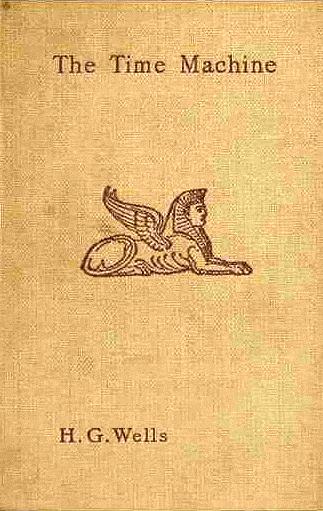
The Time Machine by HG Wells


1. What an ending! That ending is just perfect. No matter how many times I read this novella, the ending gets my mind turning. Throughout, the story is paced well – the actions do not crowd together, the philosophical and personal introspection doesn't drag slowly on, and the shifts in time back and forth are typically accompanied by the character assessing their situation and setting their scene, which helps the readers do the same. For instance, after that Time Traveler finishes his long story, everything stops for a single paragraph: he lights his pipe, the first person looks around, each of the other characters is placed while the first person gathers his bearings, then the interrogation begins. This also allows the reader to gather his bearings after this fantastic and lengthy monologue. Wells does a good job of these little breaks for the characters and readers, it helps the whole stay legible.

2. Wells's task apes that of the Time Traveler: namely, to relate these scenes and these stories to somebody who has never been there and can never be there. Wells succeeds. I do not think that any other Wells book I have read is so well written. "A man couldn't cover himself in dust by rolling in a paradox, could he?" "This possibility had occurred to me again and again while I was making the machine; but then I had cheerfully accepted it as an unavoidable risk—one of the risks a man has got to take! Now the risk was inevitable, I no longer saw it in the same cheerful light." "Witness that even when mind and strength had gone, gratitude and mutual tenderness still lived on in the heart of man." There are many examples here of writing I'd like to list out, but that would take too much time. His writing expands premises and contracts conclusions, but explores them later through actions and ruminations. He also effectively uses grammar instead of letting it prescribe his prose's pace and structure –dropping words and punctuation as needed to influence the readers' understanding, to reinforce importance, and alter the pace as needed.


3. The book takes industrialism-era capitalism to a logical extreme as a warning against it. The basic tenant is socialistic, but he doesn't awkwardly preach. This is a classic science fiction technique that he does well here. He does not tell it off so much as show some dangers inherent in it. His writing here both shows and tells about other things – and does both well without becoming redundant. But in his anti-capitalism, it's almost all showing. Actions speak louder than words, some say, but here this communicated his point well.

4. This novella is tight and focused. On the day I read it again, I cannot now point to a single part that does not illuminate something central to the book: characters, cultures, situations, or theme. There seems to be no word out of place, distracting, or not helpful and, perhaps, necessary. While I also really enjoy complex narratives and puzzles to piece apart, this simple narrative just steals my heart every time. I like novellas because they are usually focused well: The Old Man and the Sea, The Red Badge of Courage, and this one are three that always come to mind as my favorites. Later fiction dealing with eschatology and time travel has shown, too often this theme can get mired down dully examining the paradoxes implied by the narrative device — the time machine here. But Wells admirably sticks to his story and does not get distracted from making his point. I think this works — not necessarily because it could be called efficient, but because it allows him to delve deeper into what he is interested in. It allows his theme of the dangers of capitalism to be the focus, rather than the time machine itself — which is just the tool to talk about that theme. I enjoy fiction that is a human story, and honestly so, no matter how fantastic the setting or set pieces, because as a human I can relate to these stories in a way that I can't relate to a time machine. Wells focuses on the human aspects of his story very well.


5. The character of the Time Traveler himself is echoed in both the Eloi and Morlocks. The Eloi are his dramatically whimsical side played out to the nines. While the Morlocks are his industrious, engineering side exaggerated. This is an effective tactic for such a short book. Any longer and the obvious comparisons could have easily been overplayed, but in this context it really works. The Time Traveler could become too ambiguous a character without this.

30 July, 2015

The Plague by Albert Camus

For Garrett


1. This is a failure. It failed to hold my attention, my interest, or my empathy. It is a convoluted mess, and it leaves me to think that Camus can't be bothered to tell a story, write a sentence, or communicate an idea. At the least he cannot here. His characters are flat and uninteresting and they all speak in the same voice - they are mostly indistinguishable throughout the novel. Even if the character similarities are intentional for some obscure point about "mankind", this is just bad writing. A lot of the pages seem like filler - like they do not illuminate characters, situations, the plot, or the underlying ideas. It also seems like a shallow description of a plague ravaged town that carries little weight or believability. Camus is forever telling his readers that he will explain something later, which I think is a bad writing tactic.  But by the time I got to the end of the book, I wished he would've explained some of the book itself.

2. What is it actually about? I could not argue effectively against a surface interpretation - it could be just a fictional story about a plague town. Where he does gain depth, it's all over the place - Christianity, communalness, love, individuality, revenge, and violence. But I also could not argue against any of those being "the plague". Perhaps violence is the strongest argument simply because Tarrou states explicitly that is the plague to him. But he's not the main character, so have a grain of salt. The third option is contextually based: a besieged city during either world war. The book is based in some unnamed Mediterranean city, and many of those went through similar experiences shortly before the book was written. I don't know, but if Camus did, he should've gotten to the point eventually.


3. It's moderately interesting that the main character is the plague, not a human. But, Charles Dickens did this better in A Tale of Two Cities. And that is the first time I have ever said that Dickens did anything better than anybody.

4. Maybe this was well written in French, but this translation makes it seem poorly written. The translator isn't even named on the cover or inside the book. I can't read the one character struggling to write a single sentence without believing that he is voicing Camus' own frustrations. There are some beautiful descriptions, some poetic metaphors, and an over-arcing mood of strangeness that are all well done. But they are rare enough to be notable.


5. Ultimately, his arguments are ineffective. His anti-Christianity is straw-mannish and overly bitter. His anti-death penalty is idealistic and naive. His saintliness is confusing, but interesting - though he may be actually talking about citizenship. His "love is egoism" argument is shallow and self evident, aside from being repeated so often that I'm sick of it by the end. His individuality arguments are undermined by the lack of same in all of his characters. His arguments about revenge can be summed up with: all people want revenge at times, and sometimes that is a bad thing. The broader argument that adversity draws people together and tears them apart is self evident and not explored in any interesting way that illuminates humans or humanity.

6. If he was satirizing something, I missed it. By writing a bad book he failed to satirize it effectively. If one writes a bad book intending to make fun of bad books, they've just added another bad book to the list. Nothing else. I don't think he was satirizing anything, but I certainly am having a hard time understanding this book. What did I miss here?

7. On reflection of a couple of weeks time, I do think that his main theme is saintliness without god. This explains much, but not everything. I still do not like this book, but realizing this as an ideal helps fit this novel into the oeuvre of Camus' work.

The Count of Monte Cristo by Alexandre Dumas & Auguste Maquet

For Garrett


1. This novel is a rollicking good adventure. Something is always happening—every chapter has its point. Even when a scene comes as a surprise with no forewarning—like the first Cavalcanti scene—it only takes a couple of pages to get underway. In this, at this, to this I marvel. But how did he do this? I think it was mainly through two tactics: the first is the incessant action that remains central to every chapter, driving the plot forward; and the second is long breaks for back story or separate stories within the overarching story. These lengthy back stories allow the actions to breathe and the readers to catch their breath. The plot is so relentlessly driving that these breaks from the action are necessary. Haydée's three chapter long story is the most glaring example of this, and what a story! I was all attention. And when her story was over, the book returned to the driving necessities of Edmund's revenge and I felt refreshed and ready to continue.

2. Descriptions are splendid here. Instead of full on blazon, we get "lovely", for example, which allows the imagination of the reader to run with it, imagining their own version of "lovely" and placing that in the novel. This, like never showing the monster in a horror film, is much more effective than blazon could have been. But, he still gives enough specifics to get the ball rolling: a long neck, thin lips, delicate hands, et cetera. Usually he gives one or two of these, and that works. These descriptors come off as hints, tantalizing glimpses that get the mind running. This praise of descriptors applies equally to people and places. It's imagination sparking to think of that lovely garden beside the telegraph tower—a place full of hinting lines that the reader has to fill in with details from their own experience.


3. My biggest complaint is a lack of personality in many characters. This doesn't matter in Shakespeare's plays because they are so short. But here, because this book is so long, the lack of personality in the characters is glaring. At its base this is the side effect of his focus on actions. Like Marshawn Lynch, he is all about that action, and his characters seem to be as well because that's the only way we know many of them. The many characters end up being indistinguishable in a novel so packed full of actions. Though the Count, Albert, and Abbet Faria are distinguishable and their actions support their characterization, they are distinguished by more than just their actions. Their conversations, their thoughts, their interactions with other characters all define these three actual characters better than the indistinguishable rest of the characters in the book.

4. My 2nd biggest complaint is that the novel skips the character changing time in Edmund Dantès' life. We see, in his dungeon, the beginning of the change and the reasons for it. But we miss the 10 years where the change actually occurs. This is probably to increase the mystery of his return. But I think the hints to these 10 years are not quite enough for me as a reader. He had the treasure, then he had a hundred million. He is a new person, but we do not see the character arc. The book is focused, like the plot, on the revenge. It ignores the large bit of time where Edmund Dantès betters himself and prepares for his campaign. As somebody who often prefers character development to plot, I do think this is a weakness in the novel. Though we can speculate—especially with the hints provided—this novel leaves me wanting to know more about that period in Dantès' life than the basic: 1. Steal treasure. 2. ??? 3. Profit!


5. We're left with the puzzle of Edmund Dantès at the end: namely does the reader believe that he is God's agent or not? The ending leaves us with this moral ambiguity. This is the central problem of the book, and it's not answered at the end despite hints seeming to point in both directions. I enjoyed this mystery. I feel like when the book first came out and everybody in the world had read it, you could define something about people by whether they thought Edmund was God's divine wrathful angel, or whether he was a petty slighted lover selfishly pursuing his own vengeance.

Baudolino by Umberto Eco

For Garrett


1. Chapter Structure: without some cheap cliffhanger endings, he keeps it moving well and quickly. How? Each chapter is a sort of short story, and something interesting happens in each. But I don't think the titles can be undersold: they're slightly spoiler-ish, slightly funny, and all while beautifully satirizing Biblical interstitial titles, which are dumb. Because of the narrator himself, some chapters fly by while others more slowly examine something perplexing.

2. Honesty: Baudolino doesn't understand the meaning of his life story and neither does Eco. Until Baudolino understands at the end, the book lets in little light. It's confusing when Budolino is confused and clear when he has clarity. This is fun! But it turns off most of my friends to this novel.


3. At its base, this book is a combination of a medieval travelogue and dialogue. This is intriguing and well realized. It's a nontraditional dialogue, sure, but it works. Neko (Pictured Above) with his wealth, his power, and Baudolino with his love, his power. Neko with seeing the forest, Baudolino with examining every tree. I don't think it lacks movement at any point.

4. Foreshadowing: Eco is a master of this here. From slipping in his father's death at the start, to every chapter's title, to little mentions and hints of the journey Budolino takes, the foreshadowing helps make this book run. It keeps the reader excited for what's coming next.


5. Characterization: Frederick is wrathful and loving both, but the rest, well, they're not explicitly described at almost any point. I'm thinking mainly of Neko and Baudolino. We slowly understand that Baudolino is childish, trusting, and sort of going through the motions of life. Not listless, per say, but perhaps not as addicted to long-term goals and dreams as others. Even his project of discerning his story is forgotten by him for 40 plus years after he tries just ten pages. His big character arc is really tied up with this, so by the end he has goals and follows them. Neko on the other hand, is a wealthy, powerful member of court, and values the finer things of life. He's addicted to his culture. Through and through he finds meaning in keeping things as they are. Today he would be really into sustainability. By the end, neither of their reactions are surprising because Eco does a great job of defining them by showing rather than telling. The secondary characters are more told, but this works for them because they are not central to the novel.

6. The End: Baudolino glimpses meaning to his life—his service to those around him—then goes off to pursue that, first as a stylite outsider dispensing wisdom and sense, then as a father trying to find his daughter again. He also wants his story told as a sort of text to learn from; in other words, he wants to serve the world through their memory of him as well. He is horrified by learning that he drowned his father, and wants to continue helping people—it becomes his obsession. Though it really was all along, he finally realizes it.

29 July, 2015

Info Post

1. I do not want to discuss whether I agree with the ideas or not. This discussion does not inform me as a writer, which is what these notes are intended for. Rather, I want to find out how an argument is formed through this storytelling and writing, and how those techniques help or hinder the arguments, the ideas, or the reader's ability to engage with them.

2. I see a difference between storytelling and writing. Some books written well are boring and nothing that happens seems important to me, while some good stories are written so poorly that I cannot understand or enjoy them. The two are intertwined and support each other: what lasts seems to be popular stories that are well written. This is a key examination in these notes.

3. Some of these notes come off as me making objective statements. I do not intend this. These are all simply my perspectives on these books in the personal context in which I read them. But to save me from writing "to me" too many times, I will just say what I perceived and not worry about tediously billboarding my personal perspectives.

4. I think it may be useful to think of most of these books as on a line somewhere between pulp fiction and literature. That is to say, driven by the plot with no import, or driven by import and introspection with no plot. These are extreme end, impossible, and a false dichotomy. But literary fiction is genre fiction in the same way that science fiction, fantasy, and romance lit are.

5. The popular phrase when I was in college was, "Show, don't tell." I disagree. I think books that only show risk illegibility, while ones that only tell often fail through boredom and reader fatigue. Instead, my thinking about showing and telling is, "Show and tell, but do both well."

6. Thanks for visiting and feel free to jump in with your notes or disagreements. These are intended to be notes for me, posted on a blog simply to be more easily searchable. But I am always up for a discussion about these issues and writing in general.

7. I only wish I was taking notes like this for my whole life. There's a lot of great books I've read and learned from that I don't have notes on. Think of this as my notes on books I've read after turning thirty.